What Golf Clubs Does a Beginner Need? A Complete Guide
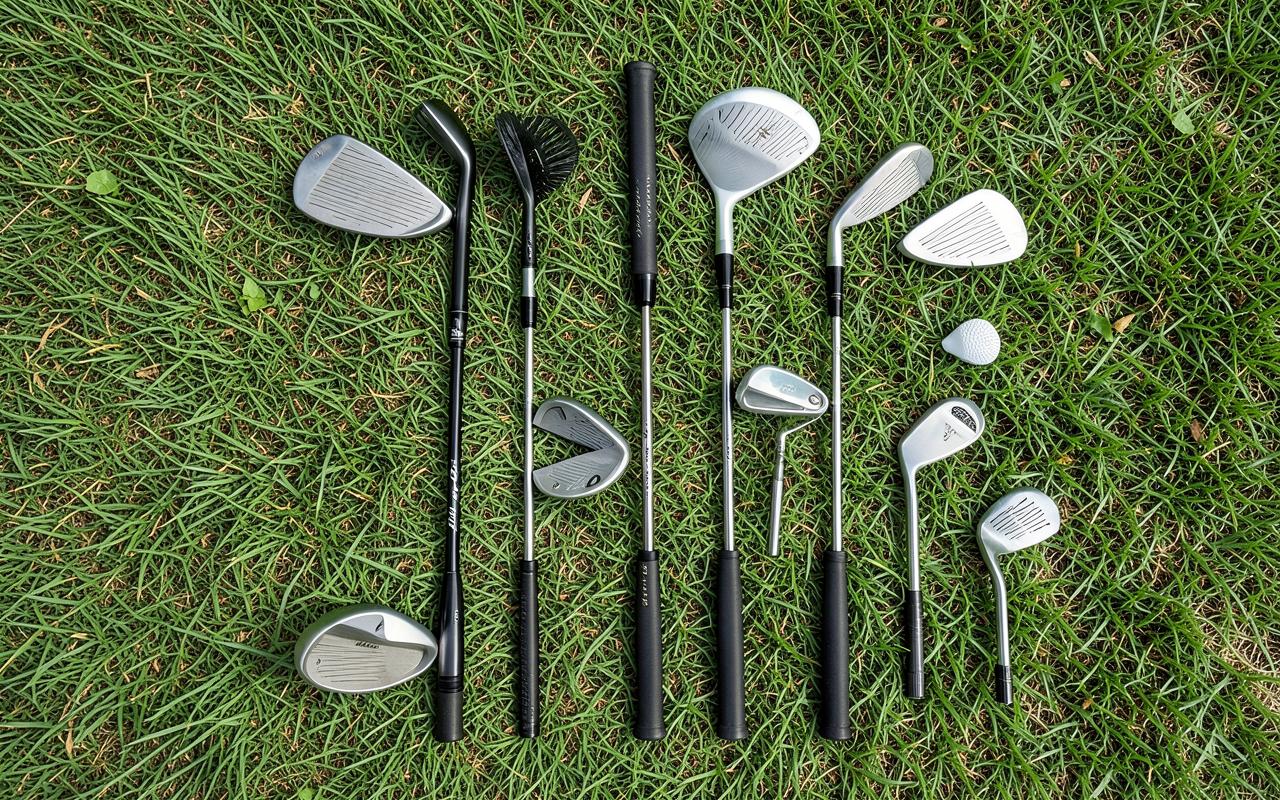
Starting golf can be overwhelming due to the sheer volume of equipment available. This guide breaks down the essential clubs required by USGA rules and practical necessity, helping new players build a functional bag that simplifies the learning curve without unnecessary expense.
Parspun is reader-supported. When you buy through links on our site, we may earn an affiliate commission at no extra cost to you.
Parspun publishes independent golf advice. Some pages on this site contain affiliate links.
Walking into a golf retail store for the first time can be an intimidating experience. The walls are lined with dozens of different clubheads, various shaft materials, and marketing terminology that sounds more like aerospace engineering than a leisure sport. For a new golfer in the United States, the primary goal should be to find equipment that makes the game easier to learn and more enjoyable to play, without spending thousands of dollars on technology designed for professionals.
Understanding what golf clubs a beginner needs is about prioritizing function over fashion. While the rules of golf allow for a wide variety of equipment, most novices will find that having fewer, more specialized tools in their bag leads to faster improvement and less frustration on the course.
Understanding the 14-Club Rule vs. Practical Needs
The USGA Limit Explained
The United States Golf Association (USGA) governs the rules of golf in America. One of the most fundamental equipment rules is Rule 4.1b, which states that a player must not start a round with more than 14 clubs. You can have fewer than 14, but exceeding this number results in penalties. For a beginner, this 14-club limit is a ceiling, not a requirement. Most professionals carry the full 14 to cover specific yardage gaps, but a new player rarely has the swing consistency to justify that many options.
Why Beginners Should Start with Fewer Clubs
When you are first learning the mechanics of a golf swing, simplicity is your greatest ally. Having 14 clubs often leads to "analysis paralysis," where a player spends too much time worrying about which club to hit rather than focusing on their setup and tempo. Furthermore, at the beginning stages, many players find that they hit their 6-iron, 7-iron, and 8-iron roughly the same distance because they haven't yet developed the consistent ball-striking required to see the variance in loft. Carrying a "half-set" of 7 to 9 clubs is often more than enough to navigate a standard par-72 course.
The Benefits of a Minimalist Bag
A minimalist bag is lighter, easier to carry, and forces you to learn how to control your shots. By having fewer choices, you become more intimately acquainted with how each club performs. It also significantly lowers the barrier to entry financially. Investing in a high-quality set of eight clubs is often a better long-term strategy than buying a low-quality set of 14.
The Essential Starter Set Components
The Driver: Your Long-Distance Tool
The driver is the longest club in the bag and features the largest head. It is designed specifically for hitting the ball off a tee on par-4s and par-5s. For beginners, the driver can be the most difficult club to master due to its length and low loft. Look for drivers marketed as "High Launch" with at least 10.5 to 12 degrees of loft, which helps get the ball into the air more easily.
The Fairway Wood or Hybrid Alternative
After the driver, you need a club for long shots from the fairway. A 3-wood is traditional, but many experts recommend a 5-wood or a 3-hybrid for beginners. These clubs have more loft than a driver and shorter shafts, making them much easier to control. A hybrid, which combines the characteristics of an iron and a wood, is particularly useful for getting the ball out of the rough.
The Mid-Iron Foundation
The "meat" of your set will consist of irons. For a beginner, the most essential irons are the 7-iron and 9-iron. The 7-iron is the quintessential learning club—long enough to provide distance but lofted enough to be forgiving. The 9-iron is used for shorter approach shots to the green. As you progress, you will fill in the gaps with 6 and 8 irons.
The Short Game Essentials: Wedges
Golf is won and lost within 100 yards of the hole. You need at least two wedges: a Pitching Wedge (PW) and a Sand Wedge (SW). The Pitching Wedge is usually included in iron sets and is used for longer chips and approach shots. The Sand Wedge has a wider "sole" (the bottom of the club) designed to help the club glide through sand and thick grass without digging in.
The Putter: The Most Used Club in the Bag
Statistically, the putter accounts for nearly 40% of all shots taken in a round of golf. It is the only club used on almost every single hole. Beginners should look for a "mallet" style putter—these have larger heads and more weight in the perimeter, which helps keep the clubface steady during the stroke.
Demystifying Club Categories for Novices
Woods and Drivers
Woods are called such because they were historically made of persimmon or maple, though today they are made of titanium or carbon fiber. They are designed for maximum distance. As a beginner, focus on "fairway woods" with larger profiles that provide a high Moment of Inertia (MOI), which is a fancy way of saying the club resists twisting when you don't hit the ball in the center.
Hybrids: The Beginner's Best Friend
Hybrids have revolutionized the game for high-handicap players. They replace difficult-to-hit long irons (like the 3, 4, and 5 irons). Because the center of gravity is lower and further back in a hybrid, it is much easier to launch the ball high into the air compared to a traditional thin-faced iron.
Irons: Cavity Back vs. Muscle Back
You will often hear terms like "blades" or "muscle backs." As a beginner, stay away from these. They are designed for elite players who want to "work" the ball. Instead, look for "Cavity Back" irons. These have a hollowed-out back, moving the weight to the edges of the club. This creates a larger sweet spot, meaning your shots will still travel relatively straight and far even if you miss the center of the face.
Wedges: Pitching, Sand, and Lob Options
Wedges are defined by their loft. A Pitching Wedge is usually 44–48 degrees, while a Sand Wedge is 54–56 degrees. Some sets include a Gap Wedge (between the two) or a Lob Wedge (60 degrees). Beginners should generally avoid Lob Wedges initially, as they require a very precise swing to execute properly and can lead to "thinning" the ball across the green.
Shaft Flex and Material: Why It Matters
Steel vs. Graphite Shafts
Irons typically come in either steel or graphite. Steel is heavier, more durable, and offers more feedback (vibration), which better players prefer. Graphite is much lighter and helps increase swing speed. Most beginners, especially those with average or slower swing speeds, benefit from the lightness of graphite, as it helps generate more distance with less effort.
Determining the Right Flex for Your Swing Speed
Shaft "flex" refers to how much the club bends during the swing. Common ratings include Senior (A or M), Ladies (L), Regular (R), Stiff (S), and Extra Stiff (X). If you use a shaft that is too stiff, your shots will likely fly low and to the right. If it is too flexible, you may struggle with accuracy. Most adult male beginners start with Regular flex, while those with very fast athletic backgrounds might require Stiff.
Standard Length vs. Custom Sizing
Most clubs are sold in "standard" lengths based on average heights. However, if you are particularly tall (over 6'1") or shorter (under 5'7"), standard clubs may force you into a poor posture. Many local pro shops offer basic static fittings to ensure your clubs are the right length for your height and wrist-to-floor measurement.
Building a Set on a Budget
Boxed Starter Sets vs. Individual Purchases
For many, a "complete boxed set" is the best entry point. These typically include a driver, a wood, a few irons, a wedge, a putter, and a bag. They are cost-effective and take the guesswork out of the process. The downside is that the components are often of slightly lower quality than individual clubs. Buying individual clubs (or a smaller "iron set") allows for better quality but requires more research.
Evaluating Pre-Owned Equipment
The secondary market in the US is vast. You can often find premium clubs from three or four years ago at a fraction of their original price. When buying used, check the clubfaces for excessive wear (browning in the center) and ensure the shafts are not dented or rusted. Buying a used "game improvement" set from a reputable brand is often better than buying a brand-new "no-name" set from a big-box department store.
Prioritizing Quality Where It Counts Most
If you are piecing a set together, spend the most money on your putter and your driver. You will use the putter most often, and a good driver will provide the most technological help for your longest shots. You can afford to be more budget-conscious with your irons and wedges as a beginner.
Key Features to Look for in Beginner Clubs
Perimeter Weighting and Forgiveness
Forgiveness is the most important word for a beginner. Perimeter-weighted clubs distribute mass around the edges of the clubhead. This stabilizes the head on off-center hits. If you hit the ball toward the toe or the heel, a forgiven club will still help the ball travel toward the target.
Wide Soles for Better Turf Interaction
Beginners often struggle with "chunky" shots (hitting the ground before the ball). Irons and wedges with wider soles are designed to bounce off the turf rather than dig into it, which can turn a potential disaster into a functional shot.
Large Sweet Spots and High MOI
Look for "oversized" clubheads. While they might look bulky compared to the sleek clubs the pros use, the increased surface area provides a much larger sweet spot, which builds confidence during those first few months on the range.
Essential Accessories Beyond the Clubs
Selecting a Functional Golf Bag
You generally have two choices: a carry bag (stand bag) or a cart bag. Stand bags have two legs that pop out, making them ideal for the driving range or walking the course. Cart bags are larger and designed to sit on a motorized golf cart. For a beginner, a lightweight stand bag is usually the most versatile option.
Golf Ball Types for High Handicappers
Avoid expensive "Tour" balls. They are designed for high spin, which for a beginner usually translates to more slicing and hooking. Instead, look for "two-piece" distance balls. These are more durable, cheaper (since you will likely lose a few), and designed to fly straighter.
Tees, Towels, and Basic Maintenance Tools
Keep a simple kit in your bag: a bag of wooden or plastic tees, a microfiber towel to keep your grips and clubfaces clean, and a divot repair tool to fix your marks on the green. Clean clubs perform significantly better than dirty ones, as the grooves need to be clear to grip the ball.
How to Evolve Your Bag as You Improve
When to Add More Specialized Wedges
Once you find yourself consistently landing the ball on or near the green but struggling to stop it close to the hole, it might be time to add a specialized Gap Wedge or Sand Wedge with specific "bounce" characteristics tailored to the conditions of your local course.
Upgrading Your Driver for Better Performance
As your swing speed increases and your contact becomes more consistent, you may outgrow a beginner driver. Upgrading to a model with an adjustable hosel allows you to fine-tune the loft and face angle as your swing evolves.
The Role of Long Irons in Advanced Play
Most beginners should avoid 3 and 4 irons entirely. However, as you become a more proficient ball-striker, you might find that you prefer the piercing ball flight of a long iron over the high, soft flight of a hybrid, especially in windy conditions. This transition usually happens once a player is consistently breaking 90.
FAQ
Do I really need a full set of 14 clubs to start?
No. Most beginners can play a full round of golf effectively with just 7 to 9 clubs. A common starter set might include a driver, a 3-hybrid, 7-iron, 8-iron, 9-iron, Pitching Wedge, Sand Wedge, and a putter. This covers all the necessary distance gaps while you are learning.
Is it better to buy new or used golf clubs as a beginner?
Buying used is often the smarter financial move. You can get high-quality technology from top-tier brands at a significant discount. This allows you to invest in better clubs that you won't outgrow as quickly as a cheap, entry-level new set.
What is the difference between a 3-wood and a driver?
A driver is the largest club with the lowest loft (usually 9–12 degrees) and is meant to be hit off a tee. A 3-wood is smaller, has more loft (usually 15 degrees), and can be hit either off a tee or directly off the ground on the fairway.
Should a beginner use hybrids instead of long irons?
In almost every case, yes. Hybrids are designed to be much more forgiving and easier to launch into the air than 3, 4, or 5 irons. Most modern "game improvement" sets for beginners replace these long irons with hybrids automatically.
How do I know if I need regular or stiff flex shafts?
The general rule is based on swing speed. If you carry your driver about 200–230 yards, you are likely in the "Regular" flex range. If you consistently carry it over 240–250 yards, you may need "Stiff." A quick session with a launch monitor at a golf shop can give you the exact data you need.
Conclusion
Building your first golf bag is a rite of passage for every golfer. The key is to ignore the marketing hype and focus on forgiveness, ease of use, and practical necessity. By starting with a curated selection of game-improvement clubs—specifically hybrids instead of long irons and cavity-back irons instead of blades—you set yourself up for success. Remember, the goal of a beginner set is to help you enjoy the game and build confidence. As your skill level grows, your bag can grow with you, but for now, keep it simple, keep it affordable, and get out on the course.
What we like
- Clear spec differences that affect ball flight
- Options across a wide price range
- Widely available in US retail
Things to consider
- Fitting matters more than model names
- Premium tiers add cost for small gains
- Stock and pricing vary by season
Frequently asked questions
Parspun Editorial Team
The Parspun editorial team writes plain-English gear guidance for everyday golfers, focused on specs, fit and value rather than hype.
Get the next guide first
Occasional emails with new gear guides. Double opt-in, unsubscribe anytime.


