Wedge Loft Guide for Golfers: Master Your Short Game
Selecting the right wedges is one of the most critical decisions a golfer makes to lower their scores. This guide explores the relationship between loft, gapping, and club selection to help players build a cohesive set.
Parspun is reader-supported. When you buy through links on our site, we may earn an affiliate commission at no extra cost to you.
Golf equipment guides are provided for educational purposes. We may earn a commission from purchases made through links on our site.
Understanding Wedge Loft and Its Impact on Your Game
For many amateur golfers, the long game receives the lion's share of attention during practice. However, the most effective way to lower a handicap is often found within 100 yards of the pin. Central to this success is the selection of the correct wedges. A proper wedge loft guide for golfers helps clarify why certain clubs produce specific trajectories and how to avoid the dreaded "dead zones" in your distance gapping.
What is Wedge Loft?
Loft refers to the angle of the clubface relative to the vertical plane of the shaft. In the context of wedges, these angles are typically the highest in a golfer's bag, ranging from roughly 44 degrees to 64 degrees. The loft dictates how much energy from the swing is converted into vertical lift versus forward distance. A higher loft angle creates a more significant slant, which encourages the ball to ride up the face rather than being compressed forward.
How Loft Influences Ball Flight and Spin
Loft is the primary engine of spin and trajectory. When a club with a high loft angle strikes a golf ball, it creates a glancing blow that generates backspin. This spin is what allows the ball to stop quickly on the green. Generally, as loft increases, the launch angle becomes higher and the total distance decreases. However, there is a point of diminishing returns; if a player lacks sufficient clubhead speed, extremely high lofts (such as 60 or 64 degrees) may result in the ball sliding up the face without enough forward momentum, leading to inconsistent distances.
The Relationship Between Loft and Bounce
It is impossible to discuss loft without mentioning bounce—the angle between the leading edge and the lowest point of the sole. When you bend a wedge to change its loft, you also change its bounce. As a general rule, adding one degree of loft increases the bounce by one degree, and decreasing loft reduces bounce. Understanding this relationship is vital for golfers who play in varied turf conditions, as the loft determines the arc while the bounce determines how the club interacts with the ground.
The Four Categories of Wedges
Most modern golf sets are built around a progression of four distinct wedge types, each serving a specific tactical purpose on the course.
The Pitching Wedge: The Transition Club
The pitching wedge (PW) acts as the bridge between your scoring clubs and your short irons. In modern sets, pitching wedge lofts have become stronger to match the increased distances of iron sets. Typically found between 43 and 46 degrees, this club is designed primarily for full shots into the green and longer pitch-and-run shots. Because it has the lowest loft of the wedge family, it produces the most distance but the least amount of stopping power through height.
The Gap Wedge: Filling the Distance Void
As pitching wedges became stronger, a significant "gap" opened between the PW and the traditional sand wedge. The gap wedge (often marked as AW for Approach or GW for Gap) usually sits between 48 and 52 degrees. It is the essential tool for those awkward distances where a full pitching wedge is too much, but a sand wedge requires too much effort. It allows for a full, comfortable swing on approach shots that need to land soft and stay relatively close to where they impact.
The Sand Wedge: The Versatile Scoring Tool
The sand wedge is arguably the most versatile club in the bag. Typically lofted between 54 and 56 degrees, it is engineered with more bounce to help the club glide through sand or thick grass rather than digging. While its name suggests a specific use for bunkers, it is a primary choice for various greenside chips, pitches, and mid-range approach shots.
The Lob Wedge: Precision for High-Arcing Shots
The lob wedge (LW) usually features a loft of 58 to 62 degrees. This club is designed for situations where you have little green to work with or need to clear an obstacle like a bunker or mound. The high loft produces a steep descent angle, meaning the ball stops primarily due to gravity rather than spin. While useful, it requires a higher level of skill to use consistently, as the thin face angle at impact leaves little room for error.
Building a Consistent Loft Gap Strategy
The secret to a great short game is not just having good clubs, but having the right intervals between them. Gapping is the practice of ensuring each club in your bag carries a specific, predictable distance.
The Four-Degree Rule Explained
A widely accepted standard in the golf industry is the "four-degree rule." This suggests that there should be roughly four degrees of loft difference between each wedge. For example, a common progression might be 46°, 50°, 54°, and 58°. This spacing usually translates to 10-to-12-yard increments between clubs, ensuring that a golfer is never stuck between a full swing and a half swing for standard approach distances.
Analyzing Your Pitching Wedge Loft
The foundation of your wedge set is your existing pitching wedge. Before buying new wedges, you must identify the loft of the PW that came with your iron set. Many modern "distance" irons feature pitching wedges as strong as 41 or 42 degrees. If you pair a 42-degree PW with a traditional 52-degree gap wedge, you have a 10-degree hole that will create significant scoring difficulties. Always start your configuration from your lowest lofted wedge and work upward.
Creating Even Distance Increments
The goal of a wedge loft guide for golfers is to help you achieve "distance parity." Use a launch monitor or spend time on the range to measure your carry distance with each wedge. If you find that your 52-degree and 56-degree wedges are carrying nearly the same distance, your lofts may need adjustment, or you may need to reconsider the shaft weights in those clubs to ensure a linear progression.
Assessing Your Short Game Needs
Not every golfer needs the same setup. Your swing style and the courses you play should dictate your loft choices.
Full Swing vs. Touch Shots
Consider how you use your wedges. Are you a player who likes to take full swings whenever possible, or do you prefer to manipulate one or two clubs for all shots? If you prefer full swings, a four-wedge setup with tighter loft gaps is beneficial. If you are a "feel" player who likes to open the face and hit various shots with one club, a three-wedge setup might suffice.
Course Conditions and Turf Interaction
The firmness of the turf at your home course matters. Soft, lush conditions often favor higher lofted clubs with more bounce. Conversely, firm, links-style conditions might make a high-lofted lob wedge difficult to use because the leading edge can bounce off the hard ground, leading to "thinned" or "skulled" shots.
Swing Type and Impact Position
Golfers with a steep angle of attack (divot takers) often benefit from higher lofts and more bounce to prevent the club from digging. Players with a shallow, sweeping swing may find that lower lofted wedges with less bounce allow them to get under the ball more cleanly.
Standard Wedge Loft Configurations
While customization is key, most golfers fall into one of three common configurations.
The Traditional Two-Wedge Setup
Often seen in older sets or for beginners, this consists of just a Pitching Wedge and a Sand Wedge (e.g., 46° and 54°). While simple, this leaves a massive gap that requires the golfer to master many different "finesse" shots to cover intermediate distances.
The Popular Three-Wedge System
The most common setup for the average amateur includes a Pitching Wedge, a Gap Wedge, and a Sand Wedge (e.g., 46°, 52°, 56°). This provides excellent coverage for most approach shots while leaving room in the bag for an extra long iron or hybrid.
The Modern Four-Wedge Approach
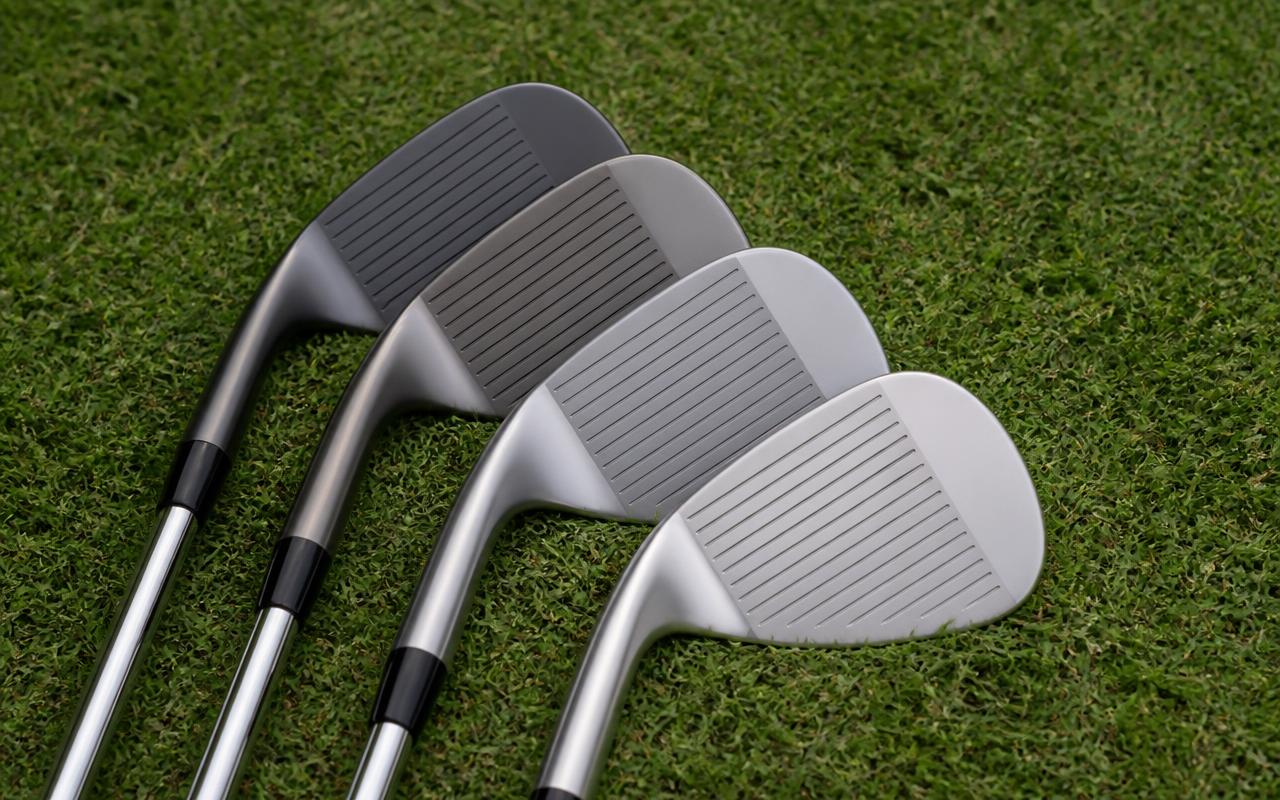
Preferred by many low-handicap players and professionals, this setup includes PW, GW, SW, and LW (e.g., 46°, 50°, 54°, 58°). This configuration provides the most versatility and ensures that no matter where you are within 110 yards, you have a club that can be swung at full strength.
The Role of Loft in Bunker Play
Bunker play is perhaps the most specialized area of the short game where loft plays a critical role.
Why 54 to 56 Degrees is the Standard
A loft of 54 to 56 degrees is widely considered the "sweet spot" for sand play. It provides enough loft to get the ball up and out of most bunkers while maintaining enough mass and bounce to move through the sand effectively. While a 60-degree wedge can be used for deep bunkers, it requires a very precise strike to avoid leaving the ball in the hazard.
Adjusting Face Angle for Different Lies
Loft is dynamic. When you open the clubface in a bunker, you are effectively increasing the loft and the bounce. A 56-degree wedge with the face opened 20 degrees might play like a 64-degree wedge. This is why having a versatile mid-lofted wedge is often more useful than a specialized ultra-high lofted club.
Sand Texture and Loft Selection
In heavy, wet sand, a slightly lower lofted wedge (54°) can help the clubhead drive through the resistance. In fluffy, white powder sand, a higher lofted wedge (58° or 60°) helps the ball pop out quickly without digging too deep into the soft surface.
Loft vs. Lie Angle: The Forgotten Connection
While golfers obsess over loft, the lie angle—the angle between the shaft and the ground when the club is at address—is equally important. If your lie angle is too upright, your shots will tend to go left (for a right-handed golfer). Because wedges have high lofts, the effect of an incorrect lie angle is magnified. A wedge that is just 2 degrees off can result in a shot that finishes several yards away from the target line.
When to Update or Bend Your Wedge Lofts
Wedges are the workhorses of the bag and are prone to wear and tear. Over time, hitting shots from the turf and sand can actually alter the loft and lie of a forged club.
Signs of Poor Gapping on the Course
If you constantly find yourself at a distance where you feel you are "between clubs," it is time to check your lofts. A gap of more than 15 yards between any two wedges is a sign that your loft configuration is working against you.
The Effects of Bending Loft on Bounce
If you take your clubs to a professional to be bent, remember the 1:1 ratio. If you have a 56-degree wedge with 12 degrees of bounce and you bend it to 54 degrees to close a gap, you now have a wedge with only 10 degrees of bounce. This change in sole geometry can significantly affect how the club feels at impact.
Routine Maintenance and Loft Checks
Serious golfers should have their wedge lofts and lies checked at least once a year. Forged wedges, in particular, are made of softer metal and can move out of specification through regular practice on hard range mats.
Selection Criteria for Your Next Wedge
When selecting your next set of wedges based on this loft guide, keep the following criteria in mind:
- Start with your PW: Find the exact loft of your current pitching wedge.
- Identify your gaps: Aim for 4 to 6 degrees of separation between clubs.
- Consider your weaknesses: If you struggle in bunkers, prioritize a 56-degree wedge with ample bounce.
- Assess your typical course: Choose lofts and bounces that match the turf you play on most often.
- Match your swing: Ensure the shaft weight in your wedges is compatible with your iron set to maintain a consistent feel.
Frequently Asked Questions
What is the most common loft for a sand wedge?
The standard loft for a sand wedge is typically 56 degrees. This provides a balance of height and distance control while allowing for enough bounce to navigate green-side bunkers successfully.
How many wedges should an average golfer carry?
Most amateur golfers benefit from carrying three or four wedges, including the pitching wedge. A three-wedge setup (PW, GW, SW) is usually the best balance of versatility and simplicity for those who do not play daily.
Does higher loft always mean more spin?
Not necessarily. While higher loft encourages spin, it also reduces the force of impact directed into the ball. Often, a 54 or 56-degree wedge can generate more spin on a full shot than a 60-degree wedge because the ball is compressed more effectively against the grooves.
Should my wedges have the same shafts as my irons?
Many golfers prefer their wedges to have slightly heavier shafts than their irons to improve feel and control on shorter, finesse swings. However, the transition should be gradual to avoid a disruptive change in timing.
What is the difference between a gap wedge and an approach wedge?
In modern golf, there is essentially no difference. Different manufacturers use different terminology. "Gap," "Approach," "Utility," and "Attack" wedges all generally fall into the 48-to-52-degree range and serve the same purpose of filling the space between the pitching and sand wedges.
Conclusion
Building the perfect wedge setup is a blend of science and personal preference. By using a wedge loft guide for golfers to inform your decisions, you can eliminate the uncertainty that often plagues the short game. Focus on consistent 4-to-6-degree gaps, understand the relationship between loft and bounce, and always start your set configuration from your pitching wedge. With the right lofts in your bag, you will find yourself with more manageable shots, more confidence over the ball, and ultimately, lower scores.
What we like
- Clear spec differences that affect ball flight
- Options across a wide price range
- Widely available in US retail
Things to consider
- Fitting matters more than model names
- Premium tiers add cost for small gains
- Stock and pricing vary by season
Frequently asked questions
Parspun Editorial Team
The Parspun editorial team writes plain-English gear guidance for everyday golfers, focused on specs, fit and value rather than hype.
Get the next guide first
Occasional emails with new gear guides. Double opt-in, unsubscribe anytime.


