Two Piece vs Three Piece Golf Balls: Which Is Right for You?
Choosing the right golf ball can significantly impact your scoring potential. This guide explores the engineering behind two-piece and three-piece designs to help you align construction with your swing.
Parspun is reader-supported. When you buy through links on our site, we may earn an affiliate commission at no extra cost to you.
Parspun publishes independent golf advice. Some pages on this site contain affiliate links.
Understanding Golf Ball Construction Basics
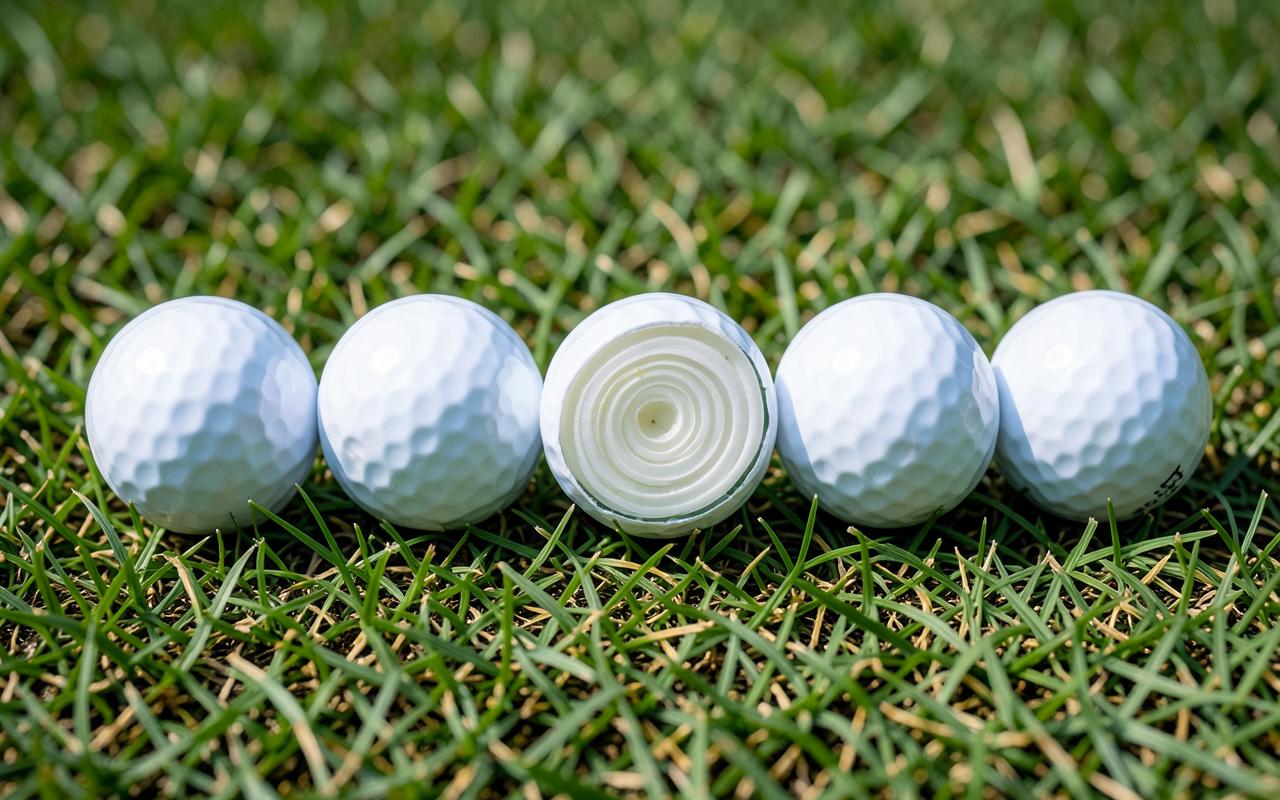
To the naked eye, all golf balls look remarkably similar. They are white, dimpled spheres designed to fly through the air and roll into a cup. However, beneath the surface lies a complex world of chemical engineering and physics. The number of layers inside a golf ball—most commonly two or three—determines how the ball compresses at impact, how much it spins, and how far it travels. Understanding these basics is the first step in matching your equipment to your specific swing characteristics.
The Role of the Core
The core is the engine of the golf ball. Typically made of high-energy synthetic rubber, such as polybutadiene, the core is responsible for the ball's initial velocity. When a club strikes the ball, the core compresses and then rebounds, propelling the ball forward. In a two-piece ball, the core is larger, taking up the vast majority of the ball's volume. In a three-piece ball, the core is slightly smaller to make room for an additional layer, but it remains the primary driver of distance.
The Purpose of the Cover Layer
If the core is the engine, the cover is the steering wheel. The outer layer is responsible for how the ball interacts with the clubface, particularly the grooves on your wedges. Covers are generally made from two materials: ionomer (often known by the brand name Surlyn) or urethane. Ionomer is harder and more durable, while urethane is softer and provides significantly more friction, allowing for better spin control on approach shots and chips.
How Layers Influence Aerodynamics
The interaction between the internal layers and the dimpled cover dictates the ball's aerodynamic profile. While dimples handle the lift and drag as the ball moves through the air, the internal construction influences the rate of spin. High-spin balls are more affected by wind and can be harder to keep straight, whereas low-spin balls (typically two-piece) tend to have a more stable, penetrating flight path.
What Is a Two-Piece Golf Ball?
A two-piece golf ball is the most common construction found on the market, particularly among casual and beginner golfers. Its design is straightforward: a large solid rubber core encased in a firm, thin cover. This simplicity is its greatest strength, offering a blend of distance and durability that appeals to a wide range of players.
The Large Energy-Rich Core
Because the core of a two-piece ball is so large, it maximizes the amount of energy returned to the ball at impact. This design is engineered to minimize spin off the driver. Lower spin generally results in longer, straighter shots because there is less side-spin to exaggerate a hook or a slice. For many amateur golfers, the extra distance provided by a two-piece ball is a significant advantage.
Durable Cover Materials
Most two-piece balls utilize an ionomer cover. This material is incredibly tough and resistant to the scuffs and cuts that can occur when a ball hits a tree, a cart path, or is struck poorly with a wedge. This durability makes two-piece balls a cost-effective choice for golfers who might lose a few balls per round or who want their equipment to last for multiple outings.
Flight Characteristics and Trajectory
Two-piece balls are generally designed for high launch and low spin. This combination helps golfers with slower swing speeds keep the ball in the air longer, resulting in more total distance. The lack of spin also means the ball will roll more once it hits the fairway, which can be a benefit for those looking for every extra yard.
What Is a Three-Piece Golf Ball?
A three-piece golf ball introduces an additional layer between the core and the cover, known as the mantle. This construction is designed to provide more versatility, offering low spin off the driver for distance and high spin off the wedges for control. It is often referred to as a "multipurpose" ball.
The Addition of the Mantle Layer
The mantle layer acts as a bridge between the core and the cover. When you hit a driver with a high swing speed, you compress the ball deeply, engaging the core and mantle together to maximize distance. However, on shorter shots with wedges, you aren't swinging hard enough to compress the core fully. In these instances, the interaction between the soft cover and the firm mantle creates the friction necessary for high spin.
Urethane vs. Ionomer Covers
While some three-piece balls use ionomer, many premium three-piece balls feature a urethane cover. Urethane is softer and allows the grooves of the club to "grab" the ball more effectively. This results in the "stop and drop" performance that better players rely on when hitting into tight pin positions. The trade-off is that urethane is less durable than ionomer and can show signs of wear more quickly.
Enhanced Multi-Layer Interactions
The beauty of a three-piece ball is its ability to change its behavior based on the force of the impact. This "variable spin" is the holy grail of golf ball design. It allows a golfer to have the best of both worlds: the distance of a two-piece ball off the tee and the finesse of a high-performance ball around the greens.
The Impact of Compression and Swing Speed
Compression is a measure of how much a golf ball deforms under a standard load. Traditionally, lower compression balls were seen as being for slower swingers, while higher compression balls were for professionals. Today, the relationship is more nuanced, but it remains a vital factor in choosing between two-piece and three-piece constructions.
Compression Ratings for Two-Piece Balls
Many two-piece balls are low-compression designs. This means they are easier to squeeze at impact. For a golfer with a moderate swing speed (under 90 mph with a driver), a low-compression two-piece ball can feel softer and provide better energy transfer, leading to more consistent distance. If a ball is too hard for a golfer's swing speed, they won't be able to compress the core, resulting in a loss of ball speed.
Optimizing Performance for High Swing Speeds
Golfers with very high swing speeds (over 105 mph) may find that a soft two-piece ball "over-compresses," which can actually lead to a loss of efficiency. These players often benefit from the firmer mantle layers found in three-piece or even four-piece balls. The extra layers provide the resistance needed to store and release energy effectively at high velocities.
The Relationship Between Layers and Energy Transfer
The efficiency of energy transfer is determined by how well the layers work together. In a three-piece ball, the mantle layer helps regulate how the ball compresses. This sophisticated energy management is why better players often prefer multi-layer balls; they offer a more consistent "feel" across a wider range of shot types, from full drives to delicate chips.
Comparing Distance and Velocity
Distance is the most sought-after attribute in a golf ball, but how a ball achieves that distance varies by construction. While three-piece balls are often marketed as premium distance balls, two-piece balls are frequently the champions of raw yardage for the average player.
Why Two-Piece Balls Often Fly Straighter
Side-spin is the enemy of distance. When a ball slices or hooks, energy that should be moving the ball forward is instead spent moving it sideways. Because two-piece balls are designed to be low-spin, they tend to stay on a straighter line. A ball that stays in the fairway will always result in better "functional distance" than a high-performance three-piece ball that ends up in the woods.
Distance Gains for Moderate Swings
For the average amateur, a two-piece ball's large core provides a high "coefficient of restitution" (COR). Essentially, this means the ball is very bouncy. At moderate swing speeds, this bounciness translates into higher initial ball velocity. Without the extra layers of a three-piece ball to "dampen" the impact, the two-piece ball can often jump off the clubface with more speed.
The Aerodynamics of Low Spin
Low spin isn't just about staying straight; it also affects how the ball moves through the air. A low-spin ball typically has a shallower descent angle, meaning it will hit the ground running. On firm fairways, a two-piece ball can provide significant total distance through roll-out, whereas a higher-spinning three-piece ball might stop more quickly once it lands.
Spin Rate and Green-Side Control
While distance is important, golf is a game of scoring, and scoring happens near the green. This is where the difference between two-piece and three-piece balls becomes most apparent. The ability to control the ball's stopping power is a major factor in lowering your handicap.
Backspin Differences in Short Game Play
A two-piece ball with an ionomer cover is inherently "slicker." When you hit a chip shot, the ball tends to slide up the clubface rather than gripping the grooves. This results in less backspin, causing the ball to release and roll out further once it hits the green. Conversely, a three-piece ball (especially one with a urethane cover) will grip the grooves, creating high backspin that can make the ball stop almost instantly.
How Three-Piece Balls Aid Scoring Shots
For players who have developed the technique to strike their wedges cleanly, a three-piece ball is a powerful tool. It allows you to aim at flags tucked behind bunkers or near the edges of the green with confidence that the ball won't roll off into trouble. This level of precision is difficult to achieve with the lower spin rates of a two-piece ball.
The Importance of Wedge Interaction
The interaction between your wedge and the ball is the most sensitive part of the game. Three-piece balls are designed to maximize this interaction. The mantle layer provides a firm backing that allows the soft cover to be pinched between the club and the mantle, generating maximum friction. This is why many golfers refer to three-piece balls as having better "feel" or "feedback."
Durability and Longevity on the Course
For many golfers, the decision between two-piece and three-piece balls comes down to economics and durability. Not everyone wants to spend top dollar on a ball that might only last a few holes.
Scuff Resistance of Different Covers
Ionomer covers, found on almost all two-piece balls, are designed for longevity. They are difficult to cut or scuff, even with aggressive wedge play. Urethane covers, while providing superior performance, are much softer. A single thin shot that catches the bottom of the wedge can sometimes "shear" the cover of a premium three-piece ball, leaving a visible mark that can affect the ball's aerodynamics.
Cost-Per-Round Considerations
Two-piece balls are significantly cheaper to manufacture and are sold at a lower price point. For a golfer who loses several balls per round, the cost savings of using a two-piece ball can be substantial. For these players, the performance benefits of a three-piece ball may not outweigh the financial cost of losing them.
Impact of Debris and Cart Path Scratches
If you play on courses with a lot of hazards, trees, or cart paths close to the fairways, durability matters. A two-piece ball can often survive a bounce off a path with only a minor scratch, whereas the same impact might ruin the cover of a three-piece urethane ball. If you value getting multiple rounds out of a single ball, the two-piece construction is the clear winner.
Choosing Based on Your Skill Level
There is no one-size-fits-all answer to which ball is better. The right choice depends on where you are in your golfing journey and what specific areas of your game need the most help.
Advice for High-Handicappers and Beginners
If you are just starting or struggle with a significant slice, a two-piece ball is usually the best choice. The low-spin characteristics will help you keep the ball in play, and the durable cover will withstand the inevitable mis-hits. Additionally, the lower cost allows you to focus on your swing without worrying about the price of a lost ball.
Recommendations for Mid-Handicap Improvements
Mid-handicappers who are starting to break 90 consistently may want to experiment with three-piece balls. As your ball-striking improves, you will begin to appreciate the extra control around the greens. If you find that your approach shots are consistently rolling off the back of the green, switching to a three-piece ball could be the simplest way to improve your scoring.
When Advanced Players Benefit from More Layers
Advanced players with high swing speeds and precise control almost exclusively use multi-layer balls. For these golfers, the ability to shape shots (draws and fades) and control trajectory is more important than raw distance or durability. The complex construction of a three-piece ball provides the nuanced feedback and performance required at the highest levels of the game.
Environmental Factors and Storage
Regardless of the construction you choose, how you treat your golf balls can impact their performance. Golf balls are sensitive to their environment, and the different layers can react differently to external conditions.
Temperature Effects on Ball Layers
In cold weather, the materials in a golf ball become firmer and less resilient. This is particularly noticeable in two-piece balls, which can feel like hitting a rock in temperatures below 50 degrees Fahrenheit. Three-piece balls may retain a bit more feel in the cold, but all balls will lose distance as the air becomes denser and the core becomes less reactive. Many golfers switch to a softer, lower-compression two-piece ball during the winter months.
Proper Storage for Multi-Layer Balls
To maintain the integrity of the layers, golf balls should be stored in a cool, dry place. Avoid leaving them in the trunk of your car, where temperatures can swing wildly. Extreme heat can potentially break down the chemical bonds in the mantle and core, while moisture can seep into the cover over long periods, affecting the ball's weight and balance. Properly stored, a modern two-piece or three-piece ball will maintain its performance characteristics for several years.
Selection Criteria for Golf Balls
When selecting between a two-piece and three-piece golf ball, we recommend evaluating the following factors to ensure you make the right choice for your game:
- Swing Speed: Determine if your driver swing speed is slow (under 85 mph), moderate (85-100 mph), or fast (over 100 mph). Slower speeds often benefit from two-piece balls, while faster speeds can utilize the complexity of three-piece designs.
- Shot Shape: If you struggle with a hook or slice, the low-spin nature of a two-piece ball can help keep you in the fairway. If you want to work the ball, a three-piece ball provides the necessary spin.
- Green-side Needs: Evaluate your short game. If you need the ball to stop quickly on the green, a three-piece ball with a urethane cover is superior. If you prefer to play "bump and run" shots, a two-piece ball is sufficient.
- Budget: Consider how many balls you lose per round. High-volume loss makes the more affordable two-piece ball a more logical financial choice.
- Feel Preference: Some golfers prefer a firm "click" at impact (two-piece), while others prefer a soft, compressed feel (three-piece). This is purely subjective but important for confidence.
Frequently Asked Questions
Do three-piece golf balls always go further than two-piece balls?
No. In many cases, especially for golfers with moderate swing speeds, a two-piece ball may actually travel further because it produces less drag-inducing spin and has a more reactive core for that specific speed. Three-piece balls are designed for "optimized" distance, which often means balancing yardage with control, rather than maximizing raw distance alone.
Is a two-piece ball better for correcting a slice?
While a ball cannot fix a swing flaw, a two-piece ball can help mitigate the effects of a slice. Because two-piece balls are designed to be low-spin, they generate less side-spin than a three-piece ball. This means a ball hit with a slicing motion will likely curve less and stay closer to the target line than a high-spin multi-layer ball would.
How can I tell if a ball is two-piece or three-piece by looking at it?
You generally cannot tell the number of layers just by looking at the cover. Most manufacturers will print the model name on the ball, and you can check the packaging or the manufacturer's website for the specifications. However, a "matte" finish or a very soft, slightly tacky feel often indicates a premium three-piece urethane ball, while a shiny, hard plastic feel is common for two-piece ionomer balls.
Why are three-piece balls generally more expensive?
The manufacturing process for a three-piece ball is more complex and time-consuming. It requires precise layering and the use of more expensive materials, such as urethane for the cover and specialized resins for the mantle. The research and development costs for these high-performance designs also contribute to the higher retail price.
Does the cover material matter more than the number of layers?
Both are important, but they affect different things. The number of layers largely dictates how the ball reacts to high-force impacts (like a driver), while the cover material largely dictates how the ball reacts to low-force impacts (like a wedge). For short game control, the cover material (urethane vs. ionomer) is often the more noticeable factor for the golfer.
Conclusion
Choosing between a two-piece and three-piece golf ball isn't just about price—it's about understanding how the physics of the ball matches your swing. For many US golfers, the two-piece ball offers the best combination of distance, durability, and value, helping to keep shots straight and costs low. However, as your game evolves and you begin to prioritize control around the greens, the sophisticated multi-layer construction of a three-piece ball becomes a vital tool for scoring. By considering your swing speed, your typical shot shape, and your budget, you can select the ball that gives you the most confidence on every tee box.
What we like
- Clear spec differences that affect ball flight
- Options across a wide price range
- Widely available in US retail
Things to consider
- Fitting matters more than model names
- Premium tiers add cost for small gains
- Stock and pricing vary by season
Frequently asked questions
Parspun Editorial Team
The Parspun editorial team writes plain-English gear guidance for everyday golfers, focused on specs, fit and value rather than hype.
Get the next guide first
Occasional emails with new gear guides. Double opt-in, unsubscribe anytime.


