Stand Bag vs Cart Bag: Choosing the Right Golf Bag for You
Choosing between a stand bag and a cart bag depends on how you navigate the course. This guide explores weight, storage, and design differences to help you decide.
Parspun is reader-supported. When you buy through links on our site, we may earn an affiliate commission at no extra cost to you.
Parspun publishes independent golf advice. Some pages on this site contain affiliate links.
Selecting the right golf bag is a fundamental decision that impacts your comfort and pace of play on the course. While the choice often comes down to whether you prefer to walk or ride, modern bag designs have blurred the lines between categories. This guide examines the structural differences, storage capacities, and functional trade-offs between stand bags and cart bags to help you determine which equipment best supports your game.
Understanding the Core Differences
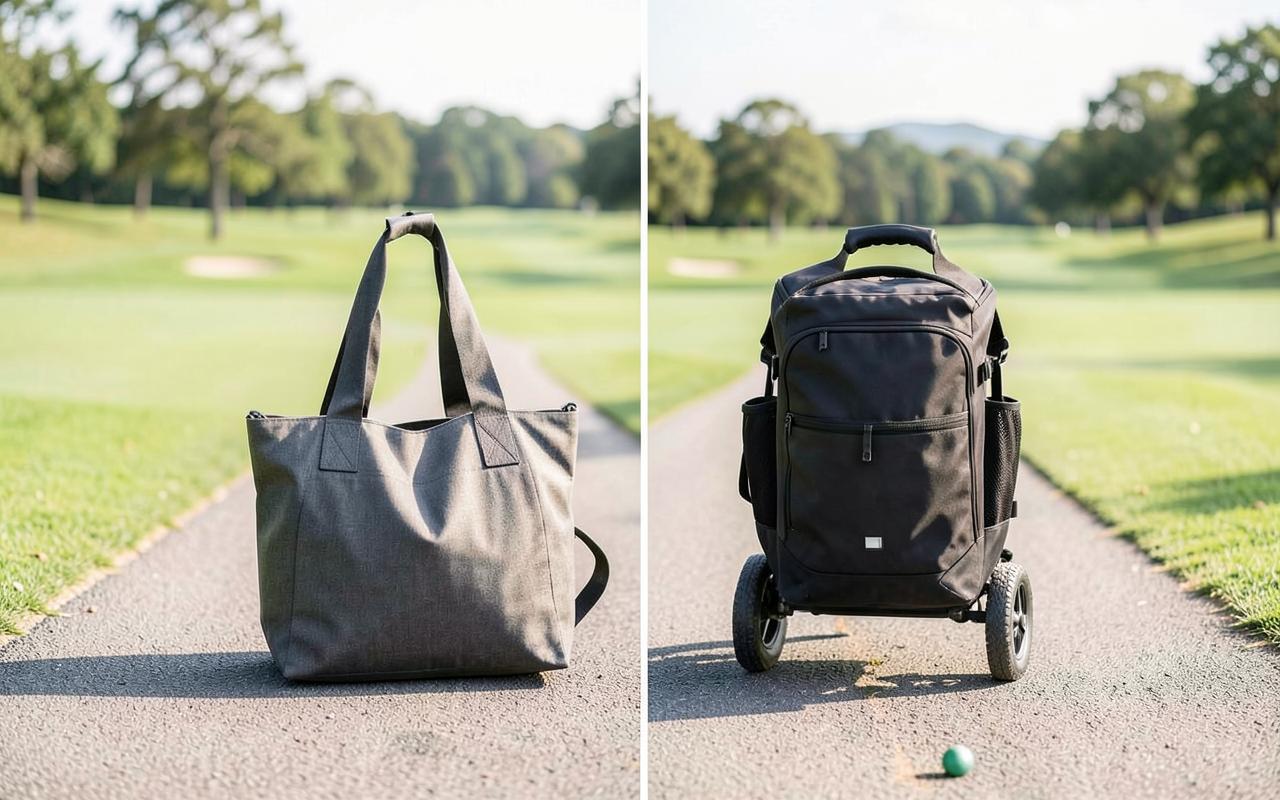
At the most basic level, the distinction between a stand bag and a cart bag lies in their intended interaction with the ground and transport vehicles. A stand bag is designed for mobility, featuring two retractable legs that deploy when the bag is tilted forward. Conversely, a cart bag is designed to remain upright only when supported by a flat surface or secured to a motorized or push cart.
Weight and Portability
Weight is perhaps the most significant differentiator. Stand bags are engineered for the walking golfer, utilizing lightweight materials such as high-denier nylon and carbon fiber leg components to keep the total weight low. A typical stand bag might weigh between three and five pounds when empty. Cart bags are significantly heavier, often starting at six or seven pounds and increasing as more features are added. Because they are not meant to be carried for four hours, manufacturers prioritize storage volume and structural rigidity over weight savings.
Structural Integrity and Base Design
The base of the bag determines how it sits. Stand bags often feature a "flex action" base or a hinged mechanism that activates the legs. This design requires the bag to be somewhat flexible. Cart bags, however, feature large, flat, and non-slip bases designed to lock into the bag wells of motorized carts or the brackets of push carts. This rigid structure prevents the bag from twisting or sliding during transit over bumpy terrain.
Strap Systems and Carrying Comfort
A stand bag almost always comes equipped with a dual-strap system, often referred to as a backpack-style strap. This distributes the weight across both shoulders, promoting better posture and reducing fatigue. Cart bags usually feature a single, heavily padded shoulder strap. This strap is intended only for short distances, such as moving the bag from a car trunk to a cart, and is often removable to prevent it from dangling and obstructing pocket access when the bag is strapped down.
The Mechanics of a Stand Bag
The engineering of a stand bag focuses on the transition between walking and hitting. Every element is refined to ensure that the golfer can set the bag down quickly, select a club, and move on without unnecessary physical strain.
Integrated Leg Mechanisms
The stand mechanism is the heart of the bag. Most modern designs use an internal or external rod system that connects the base to the top of the legs. When the base touches the ground at an angle, the tension in the rods pushes the legs outward. High-quality stand bags incorporate leg-lock systems, which are essential when you do decide to use a cart, as they keep the legs from flopping open or getting damaged by cart straps.
Tapered Profiles for Easier Carrying
Stand bags often feature a slimmer, more aerodynamic profile. This shape keeps the center of gravity closer to the golfer’s back. By tapering the bag from the top to the bottom, designers ensure that the bag doesn't bounce excessively against the golfer’s legs or hips during a stride. This ergonomic consideration is vital for maintaining energy levels through the final holes of a round.
Double vs. Single Strap Configurations
While the double strap is the industry standard for stand bags, many models offer a quick-release system or a self-balancing disc that allows the golfer to convert it to a single strap. The advantage of a double strap is the even weight distribution, which protects the lower back. However, for those who prefer the traditional "caddie carry" on one shoulder, a high-quality single strap can offer easier on-and-off access for short walks between the green and the next tee.
The Architecture of a Cart Bag
If the stand bag is a mobile workstation, the cart bag is a full-service locker. The design philosophy here centers on maximum organization and easy access while the bag is stationary.
Cart-Friendly Bases and Strap Pass-Throughs
One of the most frustrating experiences for a golfer is having a bag twist sideways during a round, making it impossible to reach the clubs. Cart bags address this with specialized base molds that "key" into the cart's floor. Additionally, premium cart bags include a "strap pass-through"—a dedicated channel behind the pockets that allows the cart’s security strap to hold the bag firmly without crushing the items inside your pockets or blocking zippers.
Forward-Facing Pocket Orientation
On a stand bag, pockets are often located on the sides. On a cart bag, virtually every pocket is positioned on the front or the very top. This is because the sides and back of the bag are obscured once it is strapped into a cart. This "stadium seating" for pockets ensures that your rangefinder, extra balls, and water bottle are always within arm's reach.
Maximum Club Organization and Dividers
Cart bags are famous for their 14-way or even 15-way (including a putter well) top dividers. These dividers often run the full length of the bag, ensuring that each club has its own dedicated slot. This prevents shafts from tangling and protects grips from premature wear. While some stand bags offer 14-way tops, they are more common in cart bags because the extra material required for full-length dividers adds significant weight.
Evaluating Your Style of Play
Choosing between these two types of bags requires an honest assessment of how you spend your time on the course. There is no right answer, only the right answer for your specific routine.
The Dedicated Walker's Perspective
If you take pride in walking 18 holes and rarely use a cart, a stand bag is the only logical choice. Even a lightweight cart bag will prove cumbersome and physically taxing over a long round. The ability to set your bag down anywhere—in the tall grass, on a slope, or next to the green—without it falling over is a convenience that walkers cannot live without.
The Power Cart Preference
For golfers who exclusively ride in motorized carts, the stand bag’s legs become a liability rather than an asset. They can get caught in the cart's hardware and take up valuable space. A cart bag offers more room for refreshments, extra layers of clothing, and specialized gear. If you never intend to carry your clubs for more than 50 yards, the extra storage and organizational benefits of a cart bag are significant.
Using Push Carts with Stand Bags
The rise of the modern three-wheel push cart has created a middle ground. Many stand bags work perfectly well on push carts, but some may twist due to the leg mechanism not sitting flush against the cart frame. If you alternate between walking with the bag on your back and using a push cart, a stand bag is still the most versatile option, provided you check the fit on your specific push cart model.
Capacity and Storage Considerations
How much "stuff" do you carry? This is often the deciding factor for many golfers.
Apparel and Rain Gear Storage
Cart bags usually feature two large, full-length apparel pockets on either side. This allows you to carry a full rain suit, an extra sweater, and even a spare pair of shoes. Stand bags usually have one large apparel pocket, which can get cramped if you are preparing for unpredictable weather.
Ball and Accessory Pockets
A cart bag might have upward of 10 to 12 pockets, including specialized spots for a dozen balls, tees, gloves, and sunscreen. Stand bags typically have 5 to 8 pockets. While this sounds like a disadvantage, it actually helps the walking golfer by preventing them from overpacking and adding unnecessary weight to their shoulders.
Specialized Pockets: Rangefinders and Valuables
Both styles now frequently include velour-lined waterproof pockets for electronics and jewelry. However, cart bags often feature "magnetic-closure" rangefinder pockets, which allow for faster access than a standard zipper—a luxury that is less common on ultra-lightweight stand bags.
Durability and Weight Trade-offs
The materials used in these bags impact both their lifespan and your fatigue levels.
Material Choices in Modern Bags
Cart bags often use heavier, more durable materials like synthetic leather (PU) or thick ballistic nylon. These materials hold their shape well and are easy to wipe clean after a muddy round. Stand bags use thinner, high-tech fabrics that are tear-resistant but may show wear more quickly at the contact points where the bag meets your back.
How Weight Affects Fatigue Over 18 Holes
It is important to remember that the weight of the bag is only the starting point. Once you add 14 clubs, a dozen balls, a liter of water, and your accessories, a 5-pound stand bag quickly becomes a 20-pound load. A cart bag, when fully loaded, can easily exceed 35 pounds. Carrying that weight—even for a few holes—can lead to back strain and diminished performance on the greens toward the end of the day.
Hybrid Bags: The Middle Ground
In recent years, a third category has emerged: the hybrid bag. These are designed for the golfer who wants the best of both worlds. Hybrid bags are essentially oversized stand bags. They feature the leg mechanism of a stand bag but the 14-way top and increased pocket count of a cart bag. While they are usually too heavy for a dedicated walker, they are perfect for someone who mostly uses a cart but wants the stand functionality for the driving range or for the occasional short walk.
Making the Final Decision
Before making your purchase, consider these final logistical elements that can affect your daily experience with the bag.
Assessing Your Typical Course Terrain
If your home course is extremely hilly, a lightweight stand bag is a must if you plan to walk. Even with a push cart, a heavy cart bag can be difficult to maneuver up steep inclines. Conversely, if you play in a region where motorized carts are mandatory, a stand bag is an unnecessary compromise in storage.
Long-Term Storage and Vehicle Space
Consider the size of your car's trunk. Cart bags are significantly bulkier and can be difficult to fit into smaller vehicles, especially if you are traveling with a playing partner. Stand bags, with their slim profiles, are much easier to stack and transport.
Impact on Club Protection
If you own expensive aftermarket shafts, the 14-way full-length dividers found in most cart bags provide the best protection against "club chatter"—the constant banging of clubs against each other. While many stand bags now offer individual dividers, the extra space in a cart bag generally keeps the clubs more isolated and secure.
Selection Criteria: How to Choose
When selecting your bag, prioritize these four criteria in order: 1) Primary transport method (walk vs. ride), 2) Minimum required storage for your climate, 3) Weight tolerance, and 4) Club organization preference. By matching these factors to your habits, you will ensure your bag is a tool that helps your game rather than a distraction on the course.
Frequently Asked Questions
Can I use a stand bag on a motorized golf cart?
Yes, you can. Most stand bags are designed with "cart-friendly" features, such as leg-lock straps. However, you may find that some pockets are harder to access once the bag is strapped in, as the straps may run directly over zipper openings.
Are cart bags too heavy to carry for a few holes?
While cart bags are not designed for carrying, they do have a shoulder strap for moving from the car to the cart. Carrying one for more than a few hundred yards is not recommended, as the lack of a dual-strap system and the bag's overall weight can cause significant discomfort.
Do all cart bags fit on push carts?
Most modern cart bags are designed to be compatible with push carts, but because cart bags are wider, they may not sit as securely on older, narrower push cart models. It is always best to check the base dimensions if you use a specific push cart.
What is the difference between a 4-way and a 14-way divider?
A 4-way divider groups your clubs into four sections (usually woods, long irons, short irons, and wedges). It is lighter but allows clubs to touch. A 14-way divider gives every club its own tube, preventing them from touching and making it easier to see if a club is missing.
How do I maintain the stand mechanism on a stand bag?
Keep the leg hinges free of dirt and debris. Avoid putting excessive downward pressure on the bag when the legs are deployed, as this can bend the tension rods. Occasionally check the feet of the legs to ensure they haven't become loose or damaged.
Conclusion
Whether you choose a stand bag for its lightweight agility or a cart bag for its massive storage and organization, the right choice is the one that aligns with how you play the game. The dedicated walker will always benefit from the ergonomic design of a stand bag, while the frequent rider will appreciate the convenience and stability of a cart bag. By understanding these structural differences, you can invest in a bag that protects your equipment and enhances your enjoyment of every round.
What we like
- Clear spec differences that affect ball flight
- Options across a wide price range
- Widely available in US retail
Things to consider
- Fitting matters more than model names
- Premium tiers add cost for small gains
- Stock and pricing vary by season
Frequently asked questions
Parspun Editorial Team
The Parspun editorial team writes plain-English gear guidance for everyday golfers, focused on specs, fit and value rather than hype.
Get the next guide first
Occasional emails with new gear guides. Double opt-in, unsubscribe anytime.


