Spiked vs Spikeless Golf Shoes: A Complete Guide
Choosing between spiked and spikeless golf shoes affects your stability, comfort, and style. This guide explores the mechanical differences and environmental factors to help you choose.
Parspun is reader-supported. When you buy through links on our site, we may earn an affiliate commission at no extra cost to you.
Parspun publishes independent golf advice. Some pages on this site contain affiliate links.
Understanding the Fundamentals of Golf Footwear
Choosing between spiked and spikeless golf shoes is a fundamental decision that affects stability, comfort, and style on the course. While traditional cleats were once the only option for serious play, modern innovations have bridged the gap in performance. This guide explores the mechanical differences, traction technology, and environmental factors that dictate which footwear style best suits your swing and the courses you play.
The evolution of the spiked golf shoe
For decades, the golf shoe was defined by its metal spikes. These long, sharp protrusions were designed to pierce the turf, anchoring the golfer to the ground during the violent rotation of the swing. However, these metal spikes were notorious for damaging greens and clubhouse floors. The transition to soft spikes—typically made of polyurethane or similar plastics—revolutionized the industry in the 1990s. These modern cleats offer a balance of aggressive grip and green-friendliness, allowing for stability without leaving lasting scars on the putting surface.
The rise of the spikeless movement
The spikeless movement gained mainstream momentum roughly fifteen years ago, driven by the desire for a more versatile, sneaker-like feel. Initially dismissed as "driving range shoes," spikeless models have evolved significantly. By utilizing advanced rubber compounds and aggressive lug patterns, manufacturers have created outsoles that rival traditional spikes in many conditions. Today, spikeless shoes are no longer just for casual play; they are a staple on professional tours worldwide.
Traction and Stability Mechanisms
How replaceable cleats provide vertical and lateral grip
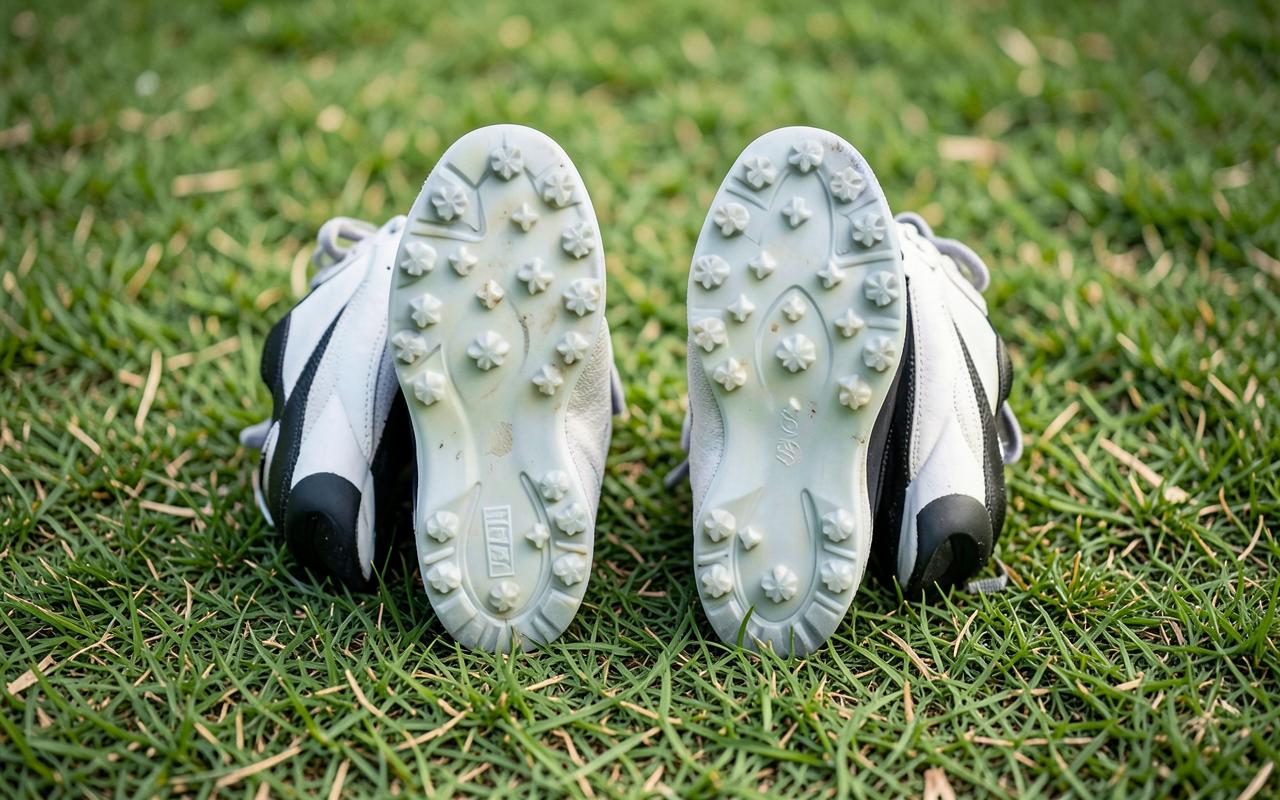
Spiked shoes rely on a mechanical connection with the earth. The individual cleats are designed to penetrate the grass and upper layers of soil. This creates a vertical anchor that prevents the foot from sliding sideways (lateral movement) or lifting prematurely during the backswing and follow-through. Because these cleats are replaceable, the golfer can ensure they always have the maximum possible grip by installing fresh sets once the edges become rounded.
The role of lug patterns in spikeless outsoles
Spikeless shoes do not feature removable parts. Instead, they use a series of molded lugs, dimples, and ridges built directly into the outsole. These patterns are strategically engineered to maximize surface area. While they do not penetrate the ground as deeply as a spike, they create friction across a wider expanse of the sole. Modern designs often use different densities of rubber—firmer in high-stress areas like the lateral side of the lead foot and softer in the midfoot for flexibility.
Surface area contact vs. ground penetration
The primary difference in traction philosophy is "surface area vs. penetration." Spiked shoes are superior when the ground is soft enough to be pierced, allowing the cleat to act like a claw. Spikeless shoes excel on firmer surfaces where a plastic spike might feel like it is "sitting on top" of the ground rather than in it. For golfers playing on hard-packed, sun-baked fairways, a spikeless shoe can actually feel more stable because more of the outsole is in contact with the turf.
Performance in Varying Weather Conditions
Managing wet turf and early morning dew
When the grass is wet, the interface between the shoe and the turf becomes lubricated. In these conditions, spiked shoes are generally considered the gold standard. The spikes reach through the slick blades of grass to find firmer soil beneath. If you frequently play early morning rounds or live in a region with high rainfall, the extra security of a spiked shoe can prevent the dreaded "slip" during a high-speed downswing.
Traction on dry, hard-packed summer fairways
In mid-summer, many U.S. courses become firm and fast. On these surfaces, spiked shoes can sometimes cause discomfort, as the spikes cannot fully penetrate the soil, leading to "pressure points" under the foot. Spikeless shoes often perform beautifully here, providing a flat, stable platform that feels more like a standard athletic shoe. The rubber lugs provide ample grip on dry grass without the feeling of walking on stilts.
Mud accumulation and outsole maintenance
Mud is the enemy of traction. Spiked shoes can sometimes collect "clumps" of mud and grass around the cleat housings, which requires frequent cleaning with a tee or brush during the round to maintain grip. Spikeless shoes, with their shallower lug patterns, tend to shed mud more easily, though very thick clay can fill in the gaps between lugs, effectively turning the shoe into a slick surface. Regular cleaning is essential for both, but spiked shoes require more attention to the individual cleat wells.
Terrain and Course Architecture Considerations
Stability on steep hills and uneven lies
If your home course is hilly, you will frequently face sidehill, uphill, and downhill lies. These situations place extreme lateral stress on your footwear. Spiked shoes offer a distinct advantage here, as they provide a deeper anchor to help you maintain your balance when the ground is sloping away from you. The mechanical grip helps counteract the gravitational pull that wants to slide your feet out from under your center of mass.
Green-friendliness and impact on putting surfaces
While metal spikes are a thing of the past, even soft spikes can leave "donut" marks on soft greens, especially if a golfer drags their feet. Spikeless shoes are almost universally gentler on the putting surface. For superintendents and golfers who pride themselves on pristine greens, spikeless footwear is often preferred for its low-impact footprint.
Walking vs. riding: The impact on fatigue
For the dedicated walker, weight and flexibility are paramount. Spikeless shoes are traditionally lighter because they lack the internal receptacles required to hold replaceable cleats. This weight difference may seem negligible over one hole, but over 18 holes (roughly 5 to 7 miles of walking), the energy savings can be significant. However, modern spiked shoes have become remarkably light, so the gap is closing.
Comfort and Versatility for the Modern Golfer
Weight differences and energy expenditure
A lighter shoe generally leads to less leg fatigue. Many spikeless models are built on running or lifestyle lasts, utilizing foam midsoles that prioritize energy return. If you find your legs feeling heavy on the back nine, transitioning to a lightweight spikeless model might improve your late-round endurance.
The 'transitional' benefit: From the car to the clubhouse
One of the biggest selling points for spikeless shoes is versatility. You can put them on at home, drive to the course, play 18 holes, and go straight into the 19th hole or a grocery store without changing. Spiked shoes are generally restricted to the turf and the locker room; walking on asphalt or tile in spikes is uncomfortable and can damage both the floor and the cleats.
Cushioning and midsole technology in different styles
Historically, spiked shoes were stiffer to provide a stable base for the cleats. Spikeless shoes took their cues from athletic sneakers. Today, both styles utilize advanced EVA (ethylene-vinyl acetate) and TPU (thermoplastic polyurethane) foams. You can now find "tour-level" spiked shoes with incredible cushioning, as well as spikeless shoes with rigid torsion bars for stability.
Durability and Longevity Factors
Maintaining replaceable cleats for peak performance
The longevity of a spiked shoe is technically superior in terms of traction. When the spikes wear down, you simply unscrew them and put in a new set for a fraction of the cost of new shoes. The upper and midsole may last for several years, with the traction being "refreshed" periodically.
Wear patterns on permanent TPU outsoles
Spikeless shoes have a finite lifespan regarding grip. Once the molded rubber lugs wear down from walking on cart paths and pavement, they cannot be replaced. While the shoe may still be comfortable, its performance on the course will degrade. For golfers who walk a lot on hard surfaces, spikeless shoes may need to be replaced more frequently than spiked ones.
When to retire your golf shoes
Regardless of the style, you should retire your golf shoes when the waterproof membrane fails or the midsole loses its structural integrity. If you feel your foot "rolling" over the edge of the sole during your swing, or if you notice significant smoothing of the tread, it is time for a new pair to ensure your safety and performance.
Swing Mechanics and Footwork Requirements
High swing speeds and the need for maximum torque
Golfers with high swing speeds (105+ mph with a driver) generate significant rotational force. For these players, the feet are the only points of contact that prevent them from spinning out. Many high-speed players prefer spiked shoes because they provide the confidence to swing aggressively without the fear of the lead foot slipping out during the transition.
Finding the balance for high-cadence walkers
If you have a smoother, more rhythmic swing and prioritize walking comfort, the slight trade-off in absolute traction offered by a spikeless shoe is often worth it. The added flexibility in the forefoot of many spikeless models allows for a more natural walking gait.
Lower body stability during the transition
The transition from the top of the backswing to the downswing is the moment of peak force. A stable shoe—whether spiked or spikeless—must have a supportive "upper" to keep the foot from sliding inside the shoe. When choosing between the two, ensure the lateral support is sufficient for your specific swing intensity.
Style and Aesthetic Choices
Classic athletic silhouettes
Many modern golf shoes look exactly like high-end running or basketball shoes. This aesthetic is common in the spikeless category, appealing to younger golfers or those who prefer a sporty, casual look on the links.
Traditional wingtip and leather designs
For the traditionalist, the spiked shoe category still offers many classic leather designs, including brogue detailing and kilties. These shoes offer a timeless look that pairs well with tailored trousers and formal club environments.
Casual lifestyle-inspired footwear
The rise of "street" golf shoes has made it possible to wear high-top designs, skate-style flats, and even golf-specific sandals. These are almost exclusively spikeless and are designed for the golfer who views the game as a relaxed, social experience.
Conclusion: Choosing the Right Shoe for Your Game
The debate between spiked and spikeless golf shoes ultimately comes down to your personal priorities and playing conditions. There is no single "right" answer, but rather a best fit for your specific needs.
Evaluating your local climate
If you live in a rainy climate like the Pacific Northwest or play frequently in the morning dew of the Northeast, a spiked shoe is likely your best primary footwear. The reliable traction in wet conditions is hard to beat. Conversely, if you live in the desert Southwest or Southern California where conditions are perpetually dry and firm, a spikeless shoe will offer all the grip you need with added comfort.
Considering your typical course conditions
Think about the terrain you play most often. Are you walking a flat, sandy coastal course, or are you navigating the steep elevation changes of a mountain layout? The more rugged the terrain, the more you will benefit from the mechanical grip of a spiked shoe. However, if you are a frequent traveler who wants to pack light, a versatile spikeless shoe that works on the plane and the course might be the ultimate solution. By weighing these factors—traction, comfort, and convenience—you can select the footwear that helps you stay grounded and focused on your next shot.
Do spikeless golf shoes slip in the rain?
While modern spikeless shoes have excellent grip, they can be more prone to slipping on wet, lush grass compared to spiked shoes. The lack of deep soil penetration means they rely on friction, which is reduced when the grass is slick. However, on flat surfaces or in light drizzle, many golfers find them perfectly adequate.
Can you wear spikeless golf shoes on the street?
Yes, that is one of their primary benefits. The rubber lugs are designed to be durable enough for walking on pavement. However, frequent walking on concrete will wear down the traction lugs faster than walking on grass, eventually reducing their effectiveness on the golf course.
Are spiked shoes better for high swing speeds?
Generally, yes. Golfers who generate a lot of torque and ground force often prefer the "locked-in" feel of spikes. The physical anchors help prevent the feet from shifting during high-intensity rotations, which can lead to more consistent ball striking.
How often should I replace my golf shoe spikes?
This depends on how much you walk and the surfaces you walk on. A good rule of thumb is to check your spikes every 10–15 rounds. If the edges of the cleats look rounded or if the "legs" of the soft spikes are worn flat, it is time for a replacement.
Which type of shoe is better for golfers with foot pain?
Spikeless shoes are often recommended for those with foot pain because they typically offer more cushioning and a more flexible sole. They also eliminate "pressure points" that can sometimes be felt from the cleat receptacles in thinner-soled spiked shoes. However, golfers needing maximum arch support should look at the specific construction of the shoe regardless of the spike type.
Conclusion
In the modern era of golf, the gap between spiked and spikeless technology has never been smaller. Spiked shoes remain the king of traction in adverse conditions and on hilly terrain, providing a level of security that high-speed swingers rely on. Spikeless shoes offer unparalleled versatility, comfort, and a low-profile feel that is perfect for firm conditions and the casual golfer. By assessing your local weather, your swing intensity, and how much you value off-course versatility, you can make an informed choice that keeps you comfortable and stable through all 18 holes.
What we like
- Clear spec differences that affect ball flight
- Options across a wide price range
- Widely available in US retail
Things to consider
- Fitting matters more than model names
- Premium tiers add cost for small gains
- Stock and pricing vary by season
Frequently asked questions
Parspun Editorial Team
The Parspun editorial team writes plain-English gear guidance for everyday golfers, focused on specs, fit and value rather than hype.
Get the next guide first
Occasional emails with new gear guides. Double opt-in, unsubscribe anytime.


