Laser Rangefinder vs. GPS Watch for Golf: Which Is Better?
Choosing between a laser rangefinder and a GPS watch is a common dilemma. Both technologies solve the problem of distance guesswork, but they do so through different methods. This guide explores the nuances of optical precision versus wearable convenience.
Parspun is reader-supported. When you buy through links on our site, we may earn an affiliate commission at no extra cost to you.
Parspun publishes independent golf advice. Some pages on this site contain affiliate links.
Choosing between a laser rangefinder and a GPS watch is one of the most common dilemmas for modern golfers. Both technologies aim to solve the same problem—eliminating guesswork on distance—but they do so through different methods. This guide explores the nuances of optical precision versus wearable convenience, helping you identify which device aligns with your style of play, visual preferences, and course management needs.
Understanding the Core Technologies
To choose the right tool, one must first understand how these devices derive their data. While they both provide yardages, the physics involved are entirely distinct.
How Laser Rangefinders Calculate Distance
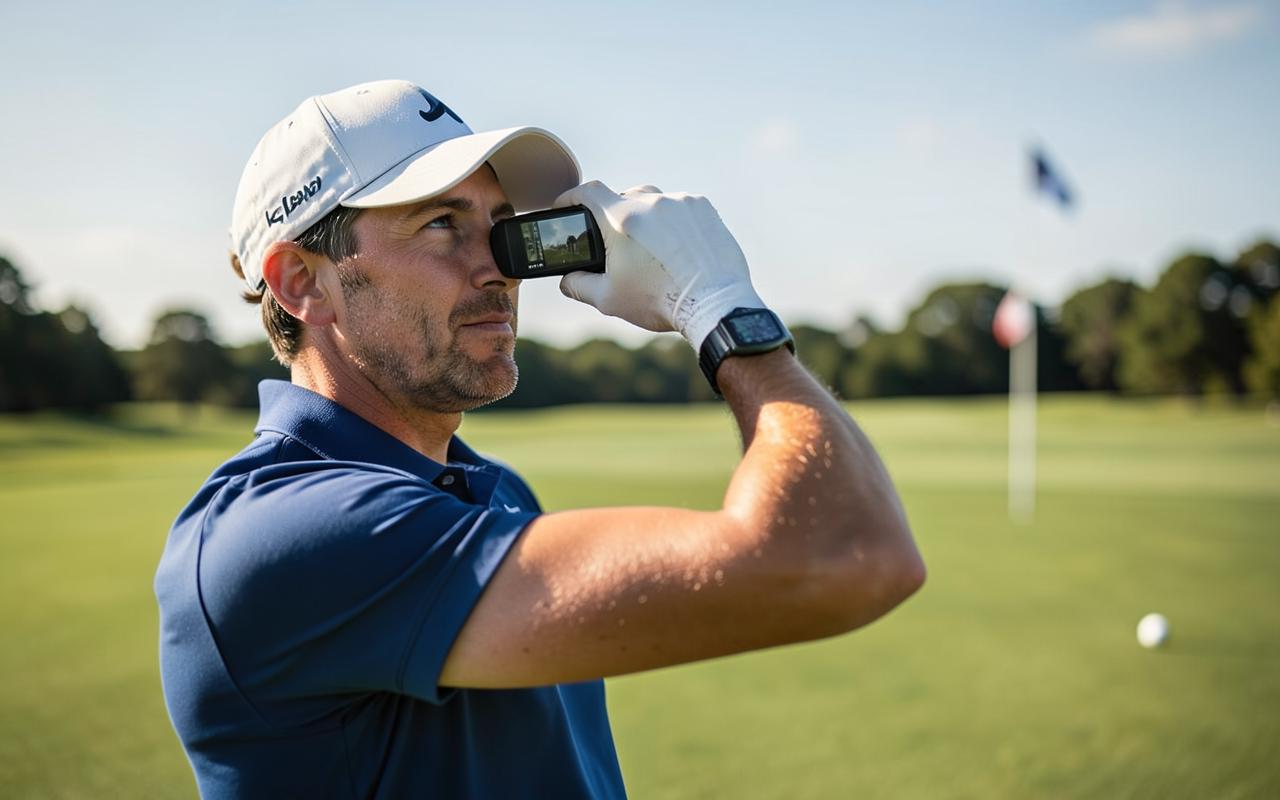
Laser rangefinders operate on the principle of "time of flight." When you look through the eyepiece and press a button, the device emits an invisible, eye-safe laser beam toward your target. This beam reflects off the object—usually the flagstick—and returns to the device. By measuring the time it takes for the light to travel to the target and back, the device calculates the distance with high precision. Modern units often include vibration feedback or visual indicators to confirm that the laser has locked onto the pin rather than a background object like a tree.
The Science Behind Golf GPS Satellites
GPS watches rely on the Global Positioning System, a network of satellites orbiting the Earth. The watch receives signals from multiple satellites to triangulate your exact position on the golf course. This position is then compared against a pre-loaded map of the course. The distance displayed is the difference between your current coordinates and the coordinates of the front, back, or center of the green. Unlike lasers, GPS devices do not "see" the flag; they know where the green is located geographically.
Accuracy and Precision: The Numbers Matter
Precision is often the deciding factor for competitive players, but the definition of "accurate" can vary depending on what information a golfer needs most.
Targeting the Pin vs. Mapping the Green
Laser rangefinders are the gold standard for pinpoint accuracy. They can typically measure the distance to the flag within one yard, and often within a fraction of a yard. This is crucial when a golfer needs to know exactly how far they must carry the ball to reach a specific hole location. Conversely, a GPS watch provides a "buffer." Because it gives distances to the front, middle, and back of the green, it encourages players to aim for the center, which statistically leads to more greens in regulation for the average amateur.
Impact of Environmental Factors on Signal and Sight
External conditions affect these technologies differently. A laser rangefinder requires a clear line of sight. If there is heavy fog, torrential rain, or a blind shot over a hill, the laser cannot reach the target. GPS technology, however, works regardless of visibility. As long as the watch can maintain a satellite connection, it will provide a distance even if you cannot see the green. However, GPS signals can occasionally drift or be affected by dense tree canopies, leading to minor fluctuations in reported yardage.
Speed of Play and Convenience
Maintaining a good pace of play is vital for the enjoyment of the game. The workflow of each device impacts how quickly a golfer can prepare for their next shot.
The 'Point and Shoot' Workflow
Using a rangefinder involves a specific physical routine: reaching into a bag or cart, pulling out the device, steadying one's hands, and firing at the target. While experienced users can do this in seconds, it does require active engagement and a steady hand. For players who struggle with shaky hands, locking onto the flag can take several attempts, which may add time to the pre-shot routine.
Glanceable Data: The Wearable Advantage
The GPS watch is the undisputed king of convenience. Because it is worn on the wrist, the distance is always visible. As you walk or drive to your ball, you can simply glance down to see the yardage. There is no need to hunt for a device or stabilize a lens. This passive delivery of information allows golfers to begin thinking about club selection well before they arrive at their ball, arguably promoting a faster pace of play.
Course Management and Hazards
Golf is a game of managing misses, and knowing where not to hit the ball is just as important as knowing where the pin is.
Visualizing the Hole Layout
Many modern GPS watches offer a full-color map of the hole. This provides a bird's-eye view that is invaluable on unfamiliar courses. It allows the golfer to see the shape of a dogleg, the location of hidden water hazards, and the layout of the green complex. A laser rangefinder is more limited in this regard; it can only tell you the distance to what you can physically see through the lens.
Identifying Carry Distances Over Bunkers and Water
Both devices help with hazards, but in different ways. A laser allows you to zap the lip of a bunker or the edge of a water hazard to know exactly what the carry is. A GPS watch provides pre-calculated distances to the "reach" and "clear" points of major hazards. The watch is often more useful for identifying hazards that are around a corner or hidden from view, while the laser is better for specific, visible targets.
Physical Considerations and Ease of Use
The physical experience of using these tools can affect a golfer’s comfort over 18 holes.
Managing Device Battery Life
Laser rangefinders typically use specialized lithium batteries (like CR2) or are rechargeable via USB. Because they only draw power when the button is pressed, a single battery can often last for several months or even an entire season. GPS watches, by contrast, are high-drain devices. They require frequent charging, usually after every two or three rounds, as the constant satellite connection and screen usage consume power quickly.
Form Factor: Handheld Stability vs. Wrist Comfort
Some golfers dislike wearing anything on their wrist while swinging, making the rangefinder the preferred choice. Others find the rangefinder cumbersome to carry, especially when walking the course. Weight and ergonomics play a role here; a watch is virtually weightless, while a rangefinder requires a dedicated pocket or a magnetic mount for the cart.
Advanced Features and Tournament Legality
Technology in golf has reached a point where devices do more than just measure distance; they act as digital caddies.
Slope Technology and USGA Rules
Both lasers and watches often come with "Slope" features, which calculate the elevation change and provide a "plays like" distance. It is critical to note that while these features are incredibly helpful for practice, they must be disabled for most tournament play under USGA Rule 4.3. Most devices now include a visible indicator (like an external light or a software toggle) to show that the slope function is turned off, ensuring the device remains legal for competition.
Stat Tracking and Performance Analytics
GPS watches often have the edge in data collection. Many watches allow players to track their score, fairways hit, and putts directly on the device. Some can even pair with club sensors to automatically record the distance of every shot. This data can later be analyzed to identify trends in a player's game. Laser rangefinders are generally standalone measurement tools and do not offer this level of integrated performance tracking.
Maintenance and Longevity
Investing in golf technology requires consideration of how long the device will remain functional and relevant.
Software Updates and Course Mapping Subscriptions
GPS watches rely on a database of course maps. While most major brands offer free updates for life, the device is only as good as the software. If a course undergoes a significant redesign, the GPS data may be inaccurate until the map is updated. Laser rangefinders require no software updates; as long as the optics are clean and the battery is charged, they will work on any course in the world, regardless of layout changes.
Durability in Adverse Weather Conditions
Both types of devices are generally built to be water-resistant, but the degree varies. High-quality rangefinders are often nitrogen-purged to prevent internal fogging. GPS watches are designed to withstand sweat and rain, but like any wearable electronic, the screen can be susceptible to scratches or impact damage if not handled with care.
Determining the Best Fit for Your Skill Level
Ultimately, the choice often comes down to the golfer's specific needs and skill set.
Why Low Handicappers Often Lean Toward Lasers
For players who can reliably hit their yardages within a few yards, the precision of a laser is vital. Knowing that the pin is 142 yards away rather than 145 can be the difference between a birdie putt and a difficult up-and-down. Better players also tend to use lasers to range the distance to the "back of the bunker" or a specific tree to execute a precise strategy.
Why Occasional Players Benefit from GPS Simplicity
For the average or high-handicap golfer, knowing the exact distance to the pin is often less important than knowing the distance to the middle of the green. GPS watches provide a wealth of information at a glance, which can help these players avoid major mistakes. The ease of use and ability to see the hole layout make GPS an excellent tool for those who want to focus on their swing rather than fiddling with equipment.
Selection Criteria for Choosing a Device
- Precision Requirements: If you need to know the exact yardage to the flag, choose a laser. If "front, middle, back" is sufficient, a watch works well.
- Visual Preference: Do you prefer a bird's-eye map (GPS) or a magnified optical view of the target (Laser)?
- Ease of Access: Would you rather have information passively on your wrist or actively target objects yourself?
- Battery Maintenance: Are you diligent about charging electronics daily, or do you prefer a "set it and forget it" battery?
- Extra Features: Do you want to track your stats and scores, or do you just want distances?
Frequently Asked Questions
Do golf GPS watches require a monthly subscription?
Most modern golf GPS watches from major manufacturers come with thousands of pre-loaded courses and do not require a recurring subscription. However, some premium apps or specific advanced analytics platforms may offer optional paid tiers for enhanced features.
Can laser rangefinders see through trees or fog?
No. Laser rangefinders require a direct line of sight to the target. Dense fog reflects the laser beam prematurely, and trees or bushes will block the signal entirely. In these scenarios, a GPS device is more effective as it relies on satellite signals rather than optics.
How accurate is a GPS watch compared to a laser rangefinder?
A laser rangefinder is typically accurate to within 1 yard or less. A GPS watch is generally accurate to within 3-5 yards, depending on satellite signal strength and the accuracy of the course mapping. While the laser is more precise, GPS is more than accurate enough for the majority of amateur golfers.
Is slope mode legal for use in handicap posting or tournaments?
Slope mode is illegal in most competitive play under USGA Rule 4.3. However, you may use a device that has a slope feature as long as that feature is turned off and the device is otherwise compliant with local rules. Always check with the tournament committee before play.
Which device is faster for maintaining pace of play?
Generally, a GPS watch is faster because it provides yardages instantly at a glance. A rangefinder requires the golfer to stop, pull the device out, and aim. However, a practiced rangefinder user can be very efficient, and the difference is usually negligible for most groups.
Conclusion
Both laser rangefinders and GPS watches are excellent tools that can help golfers lower their scores by providing reliable distance information. The decision between the two depends on whether you prioritize the absolute precision and optical clarity of a laser or the convenience, course mapping, and stat-tracking capabilities of a GPS watch. Many serious golfers eventually find that using both—a watch for quick green distances and a laser for precise pin hunting—provides the ultimate advantage on the course.
What we like
- Clear spec differences that affect ball flight
- Options across a wide price range
- Widely available in US retail
Things to consider
- Fitting matters more than model names
- Premium tiers add cost for small gains
- Stock and pricing vary by season
Frequently asked questions
Parspun Editorial Team
The Parspun editorial team writes plain-English gear guidance for everyday golfers, focused on specs, fit and value rather than hype.
Get the next guide first
Occasional emails with new gear guides. Double opt-in, unsubscribe anytime.


