How to Choose a Putter: A Comprehensive Buyer's Guide
Selecting the right putter is a critical decision for any golfer. This guide explores the nuances of head shapes, hosel designs, and stroke types to help players make an informed choice based on their individual tendencies.
Parspun is reader-supported. When you buy through links on our site, we may earn an affiliate commission at no extra cost to you.
This article provides informational guidance on golf equipment selection.
Understanding Putter Head Shapes
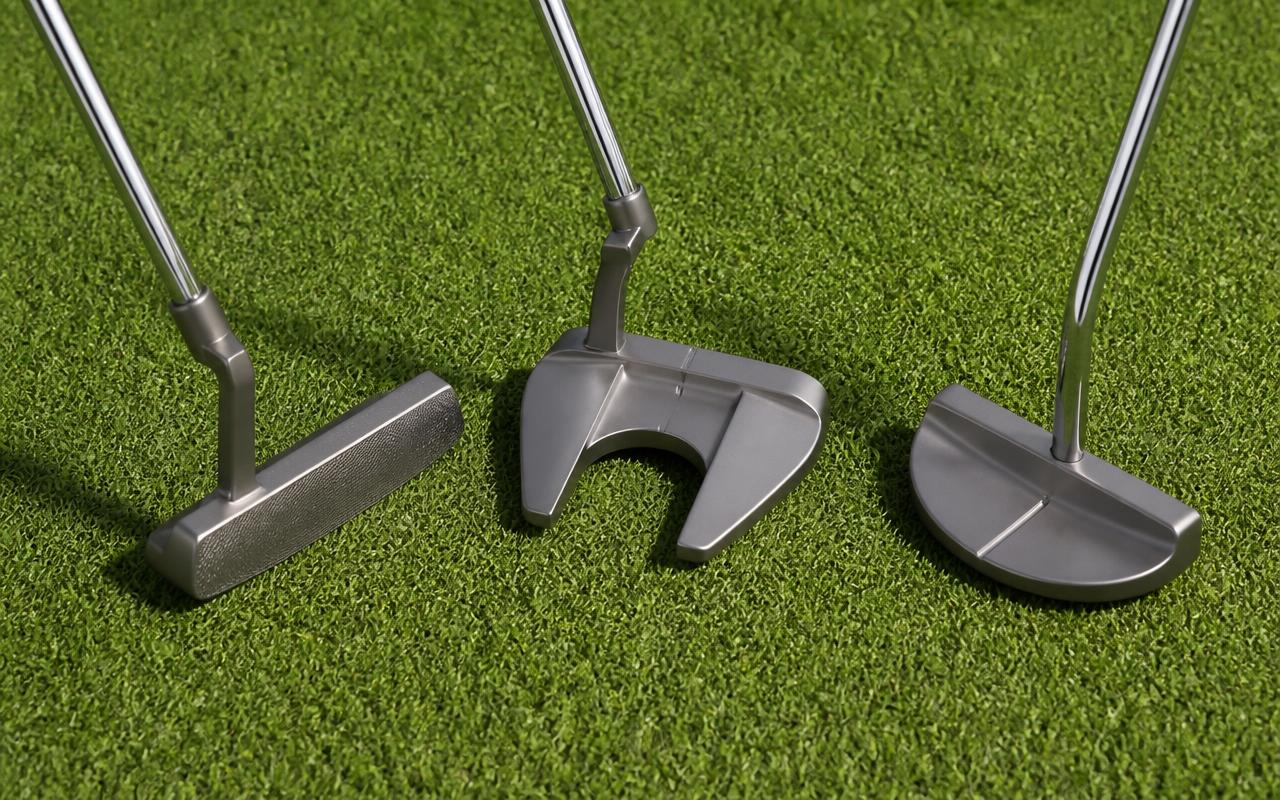
The visual profile of a putter is the first thing a golfer notices, and it plays a significant role in both confidence and performance. Head shapes generally fall into three categories, each offering distinct advantages in terms of forgiveness and alignment.
Traditional Blade Putters
Blade putters are the classic choice, favored for decades by traditionalists. They typically feature a narrow, elongated head profile. The primary appeal of a blade is the feedback and feel it provides to the player. Because they generally have less weight distributed to the far edges of the clubhead compared to mallets, blades allow for more precise control over distance and touch, provided the golfer makes contact in the center of the face. They are often preferred by players who have a natural, flowing arc in their stroke.
Peripheral Weighted Mallet Putters
Mallet putters are characterized by larger, deeper head shapes that extend further back from the face. The main advantage of a mallet is a high Moment of Inertia (MOI). MOI is a measurement of a clubhead's resistance to twisting on off-center hits. By placing weight at the perimeter and rear of the head, mallets stay more stable through impact even if you strike the ball slightly toward the toe or heel. This makes them an excellent choice for golfers seeking maximum forgiveness and consistency.
Mid-Mallet Alternatives
For golfers who find traditional blades too unforgiving and full-sized mallets too cumbersome, mid-mallets offer a compromise. These designs provide a slightly larger footprint than a blade, allowing for better alignment aids and improved stability, while maintaining a more streamlined look. They often feature a semi-circle or square-back design that helps frame the ball without the significant bulk of a high-MOI mallet.
Matching Putter Design to Stroke Type
Golfers do not all move the putter the same way. The path the clubhead travels—often called the stroke type—should dictate the technical specifications of the putter you choose. Using a putter that fights your natural motion can lead to inconsistent face angles at impact.
Straight-Back Straight-Through Strokes
If your putting motion moves on a linear path without the clubhead opening or closing significantly, you likely have a straight-back straight-through stroke. This motion is best paired with a putter that resists rotation. Typically, face-balanced putters are the ideal match for this style, as they are engineered to stay square to the target line throughout the swing.
Slight Arc Putting Strokes
Most golfers naturally have a slight arc in their stroke, where the putter head moves slightly inside the target line on the backswing and returns to square at impact before moving inside again on the follow-through. This motion requires a putter with a moderate amount of toe hang. A slight-arc stroke benefits from a clubhead that can rotate naturally with the hands and arms.
Strong Arc Putting Strokes
Golfers with a strong arc tend to rotate the clubhead significantly during the stroke, similar to the path of a full iron swing. This style is often seen in players who stand further away from the ball or who have a very active release. To accommodate this, a putter with significant toe hang is required to allow the face to open and close efficiently during the motion.
The Role of Toe Hang vs. Face Balance
The balance of the putter head determines how much the face wants to rotate during the stroke. Understanding where the weight is distributed is key to choosing a model that complements your mechanics.
How to Perform the Finger Balance Test
You can easily determine a putter's balance by performing a simple test. Lay the shaft across your index finger, finding the balance point where the club remains steady. Observe the position of the clubface. If the face points directly up toward the sky, the putter is "face-balanced." If the toe of the putter points down toward the ground at an angle, the putter has "toe hang." The steeper the angle toward the ground, the more suitable it is for an arcing stroke.
Why Center of Gravity Matters for Accuracy
The Center of Gravity (CG) in a putter influences how energy is transferred to the ball. A low and deep CG, common in mallets, helps launch the ball with more stability. Conversely, a CG closer to the face, common in blades, provides more direct feedback. Matching the CG to your strike consistency ensures that your distance control remains predictable across various green speeds.
Selecting the Correct Putter Length
Putter length is perhaps the most overlooked aspect of a proper fitting, yet it directly impacts your posture and your ability to see the line of the putt.
The Impact of Length on Eye Alignment
Ideally, your eyes should be directly over the ball or slightly inside the target line at address. If your putter is too long, you will likely stand too tall, pushing your eyes inside the line and potentially causing you to pull putts. If the putter is too short, you may hunch over, pushing your eyes outside the line, which often leads to a pushed miss.
Standard Lengths vs. Arm-Lock Options
Most standard putters are sold in lengths between 33 and 35 inches. However, specialized options like arm-lock putters are significantly longer, usually between 40 and 42 inches. Arm-lock putters are designed to be braced against the lead forearm, which can help stabilize the wrists and create a more repeatable, pendulum-like motion.
How Posture Dictates Shaft Length
Rather than choosing a length based on your height alone, you should choose it based on your natural, comfortable putting posture. Allow your arms to hang naturally and bend from the hips; the point where your hands meet is where the grip should ideally be located. A properly fitted length ensures that the sole of the putter sits flat on the ground.
Hosel Configurations and Offset
The hosel is the neck of the putter that connects the shaft to the head. It influences both the look of the putter at address and the way the club balances.
Plumber's Neck Benefits
The plumber's neck is a classic design featuring a horizontal bend that creates "offset." Offset keeps the hands ahead of the ball at impact, which helps the golfer square the face. This hosel usually results in a moderate toe hang, making it versatile for many stroke types.
Single Bend and Double Bend Shafts
These designs lack a traditional hosel, with the shaft bending directly into the head. Double bend shafts are designed to make the putter face-balanced. They are often found on mallet putters and provide a clean, unobstructed view of the ball, which is preferred by players who use a straight-back straight-through motion.
Slant Neck and Flow Neck Variations
Slant necks and flow necks offer a more seamless transition from shaft to head. These designs generally provide more toe hang than a plumber's neck, facilitating a more pronounced arc in the stroke. They are often favored by golfers who prefer a cleaner aesthetic and a more "blade-like" feel, even when using a mallet head.
Putter Face Inserts and Milling
The face of the putter is responsible for the sound, feel, and initial roll of the golf ball. Choosing the right material is a matter of personal preference and the typical green conditions you play in.
Soft vs. Firm Feel Preferences
Putters with inserts—often made of polymers or softer metals—provide a dampened feel and a quieter sound. These are excellent for golfers who play on very fast greens or who prefer a cushioned impact. Milled putters, which are carved from a solid block of metal (like stainless steel or carbon steel), offer a firmer feel and more audible feedback, which can help with distance control on slower greens.
Groove Technology and Forward Roll
Many modern putters feature grooves or patterns on the face. These are designed to grip the cover of the ball at impact, reducing skidding and promoting a quicker forward roll. The sooner the ball begins rolling end-over-end, the more likely it is to stay on its intended line.
Material Impact on Sound and Feedback
In golf, "feel" is largely tied to sound. A high-pitched "click" is perceived as firm, while a low-pitched "thud" is perceived as soft. Testing different face materials allows you to find the feedback that best helps you calibrate your speed.
Grip Size and Shape Considerations
The grip is your only point of contact with the club. Its size and shape can significantly alter how your hands and wrists function during the stroke.
Standard vs. Oversized Putter Grips
Standard grips offer more feel and allow the hands to be active, which some players prefer for touch. Oversized or "jumbo" grips are designed to minimize wrist breakdown. By filling more of the hand, these grips encourage the larger muscles of the shoulders to take over the stroke, which can improve consistency for players who struggle with "yippy" movements.
Managing Wrist Action Through Grip Choice
If you find your hands are too active at impact, a thicker grip with less taper (a consistent diameter from top to bottom) can help quiet the small muscles in your fingers and wrists. Conversely, if you feel you lose the "head feel" of the putter, a thinner, traditional grip may be more appropriate.
Counterbalanced Grip Benefits
Counterbalancing involves adding weight to the grip end of the putter. This moves the balance point higher up the shaft, making the heavy head feel lighter and more controlled. This can be especially helpful for golfers who use longer or heavier putter heads and want to maintain a smooth tempo.
Loft and Lie Angle Adjustments
While often associated with irons, loft and lie are just as important on the green. A putter that does not sit correctly at address will produce inconsistent results.
Optimizing Launch for Different Green Speed
Most putters come with a standard loft of 3 to 4 degrees. This loft is necessary to lift the ball out of the slight depression it sits in on the green. If you play on very fast, smooth greens, you might require less loft. If you play on slower, shaggier greens, a slightly higher loft can help the ball get up on top of the grass blades more quickly.
Ensuring the Putter Sits Flat at Address
The lie angle determines if the toe or heel of the putter is off the ground at address. If the toe is up, the ball will likely start left of the target; if the heel is up, it will likely start right. A proper fitting ensures the putter sits perfectly flat, allowing for a square strike.
Visual Alignment Aids
Alignment is a subjective preference. Some golfers need significant help to aim the face, while others find too many lines distracting.
Lines, Dots, and High-Contrast Shapes
Mallet putters often feature long sightlines or multiple dots to help align the center of the face with the ball. Some designs use high-contrast colors or geometric shapes to help the golfer visualize the path to the hole. Blades often have a simpler, single line or no markings at all for a cleaner look.
Choosing Aids Based on Visual Preference
When selecting a putter, pay attention to how easily you can square the face to a target. If you find yourself consistently aiming right or left during practice, changing the type of alignment aid—for example, moving from a single dot to a long line—can provide the visual cues necessary to correct your aim.
Selection Criteria for Choosing a Putter
When choosing a putter, consider these primary factors to ensure a proper fit:
- Stroke Path: Determine if your stroke is straight, slightly arched, or strongly arched.
- Balance: Match the toe hang of the putter to your stroke path using the finger balance test.
- Length: Ensure the shaft length allows your eyes to be positioned over the ball while maintaining a comfortable posture.
- Feel and Sound: Choose between milled faces or inserts based on your preference for firm or soft feedback.
- Forgiveness: Opt for high-MOI mallets if you struggle with off-center hits, or blades if you prioritize feedback and control.
- Visual Alignment: Select an alignment aid that helps you consistently square the clubhead to your target.
Frequently Asked Questions
How do I know if I need a face-balanced or toe-hang putter?
If your putting stroke is straight-back and straight-through, a face-balanced putter will help keep the face square. If your stroke moves in an arc, you need a toe-hang putter. The more pronounced your arc, the more toe hang you generally require to allow the face to open and close naturally.
What is the most common putter length for amateur golfers?
The most common lengths for off-the-rack putters are 34 and 35 inches. However, many golfers actually benefit from a slightly shorter putter (33 inches) to help get their eyes directly over the ball. A professional fitting is the best way to determine your ideal length.
How does green speed affect my choice of putter weight?
Generally, golfers who play on slower greens may prefer a slightly heavier putter to help get the ball to the hole with less effort. On very fast greens, a lighter putter or one with a softer insert can provide better touch and prevent over-hitting the ball past the cup.
Should I choose a blade or a mallet if I struggle with consistency?
If consistency and forgiveness are your primary concerns, a mallet is typically the better choice. The larger head size and perimeter weighting help maintain ball speed and direction on off-center strikes, whereas a blade is less forgiving of mishits.
Does the loft of a putter actually matter on the green?
Yes. Loft is what helps the ball transition from a stationary position to a smooth roll. Too much loft can cause the ball to bounce, while too little can cause it to skid. The right amount of loft depends on your stroke downward or upward angle at impact and the condition of the greens you play.
Conclusion
Choosing the right putter is a highly personal process that combines technical specifications with individual feel. By understanding how your stroke mechanics interact with head shapes, balance, and length, you can narrow down the vast field of options to a club that truly supports your game. Remember that the best putter for you is one that allows you to align correctly, control your distance, and maintain a consistent tempo. Taking the time to evaluate these factors will result in more confidence on the green and, ultimately, lower scores.
What we like
- Clear spec differences that affect ball flight
- Options across a wide price range
- Widely available in US retail
Things to consider
- Fitting matters more than model names
- Premium tiers add cost for small gains
- Stock and pricing vary by season
Frequently asked questions
Parspun Editorial Team
The Parspun editorial team writes plain-English gear guidance for everyday golfers, focused on specs, fit and value rather than hype.
Get the next guide first
Occasional emails with new gear guides. Double opt-in, unsubscribe anytime.


