How to Choose a Golf Push Cart: A Buyer's Guide
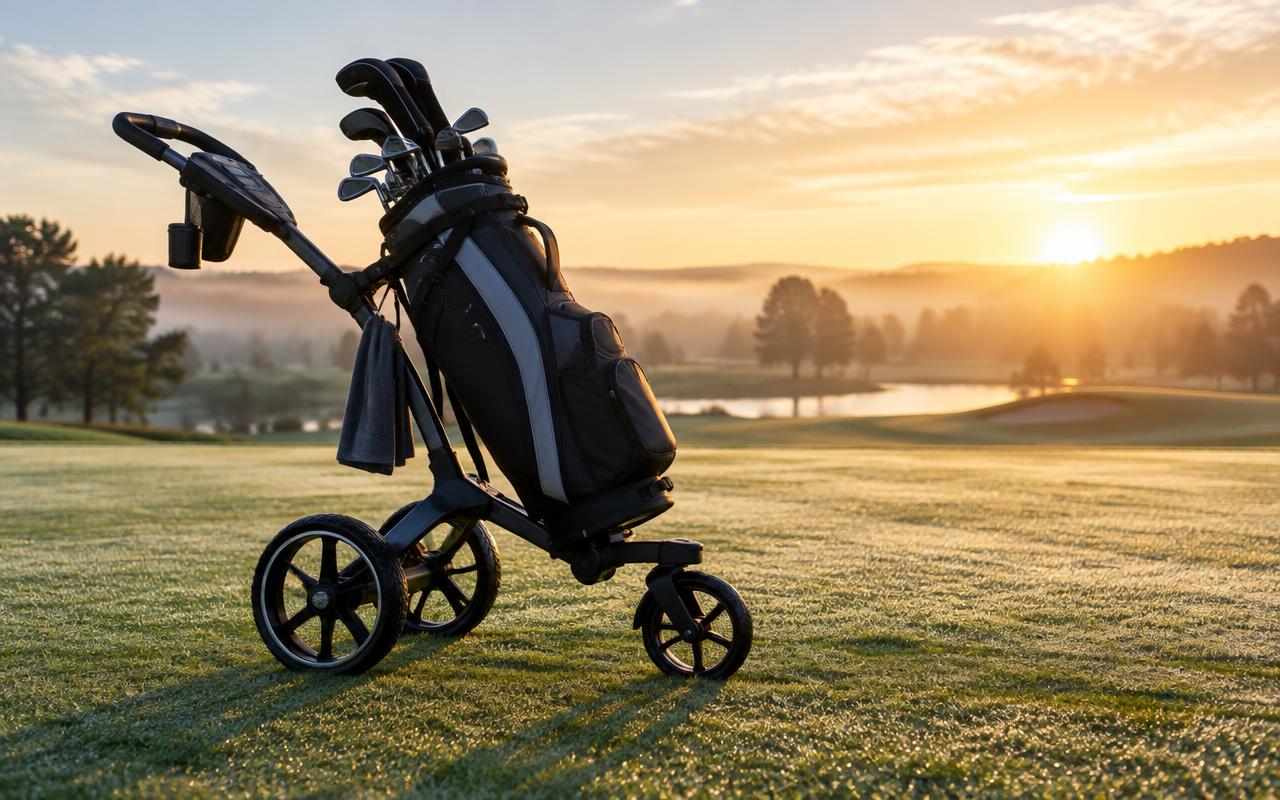
Walking the course is a golf tradition, but carrying a heavy bag can lead to fatigue. Selecting the right push cart involves balancing portability, stability, and ease of use to enhance your game.
Parspun is reader-supported. When you buy through links on our site, we may earn an affiliate commission at no extra cost to you.
Golf Equipment Guide is reader-supported. We may earn a commission through products purchased via our links.
Understanding the Benefits of Using a Push Cart
Walking the golf course is widely regarded as the purest way to experience the game. However, for many amateur golfers, the physical toll of carrying a 25-pound bag for four to five hours can lead to significant fatigue. When learning how to choose a golf push cart, the primary objective is to preserve your physical energy for the golf swing rather than the commute between shots.
Energy Conservation for the Back Nine
The human body expends considerable energy supporting the weight of a golf bag across the shoulders and spine. As rounds progress, this weight can cause minor muscle tremors, loss of posture, and decreased swing speed. A high-quality push cart transfers that load to a mechanical system, allowing the golfer to maintain a steady walking gait. By reducing the metabolic cost of movement, players often find they are more mentally sharp and physically capable during the final four holes, where most matches are won or lost.
Storage Capacity and Accessibility
Unlike carrying a bag, where every additional ounce is a burden, a push cart allows you to bring along all the essentials for a variable day on the course. You can store rain gear, extra hydration, training aids, and a full set of clubs without worrying about the weight. Furthermore, everything is positioned at waist height. Instead of bending down to retrieve a club or a ball, your equipment remains vertically organized and easily accessible, reducing the cumulative strain on your lower back.
Long-term Physical Sustainability for Walkers
Repetitive stress on the shoulders and lower back from carrying a bag can lead to chronic discomfort over years of play. A push cart encourages a more natural upright walking posture. For golfers who plan to play several times a week or remain active in the game well into their senior years, the transition to a push cart is often a proactive decision for long-term health and joint preservation.
Wheel Configurations: Three Wheels vs. Four Wheels
One of the first decisions you will face is whether to opt for a three-wheel or a four-wheel design. Both have distinct engineering advantages depending on your home course's layout.
Stability on Uneven Terrain
Four-wheel carts generally offer a wider footprint, which provides superior stability on side-hill lies. If your course features significant undulations or steep embankments, the four-wheel configuration is less likely to tip over when parked or pushed across a slope. The lower center of gravity inherent in many four-wheel designs makes them feel grounded and secure.
Maneuverability in Tight Spaces
Three-wheel carts are typically prized for their agility. Because there is only one contact point at the front, these carts can execute tighter turns around greenside bunkers and through narrow paths. The tripod-style geometry makes them feel lighter and more responsive to subtle steering inputs, which is particularly beneficial on flat to moderately rolling terrain.
The Impact of Fixed vs. Swivel Front Wheels
Standard push carts often feature a fixed front wheel, which excels at tracking in a straight line. To turn, the golfer must slightly push down on the handle to lift the front wheel—a movement known as a "pop-turn." Alternatively, many modern carts offer a swivel front wheel. This allows for 360-degree rotation without lifting the cart, making it effortless to navigate through a crowded parking lot or around a tee box. However, swivel wheels often require a locking mechanism for stability when walking long, straight fairways or traversing side-hills.
Foldability and Transport Considerations
A push cart is only useful if it can easily travel between your home and the course. The engineering of the folding mechanism is a critical factor in long-term satisfaction.
Storage Footprint and Trunk Space
Before purchasing, it is vital to measure the cargo area of your vehicle. Some carts fold into a very flat, rectangular shape, while others fold into a more compact, cube-like volume. If you frequently travel with other golfers, you need a cart that can share trunk space with multiple golf bags. High-end models often allow for the quick removal of the wheels to further reduce the storage footprint.
Mechanism Complexity: One-Step vs. Multi-Step Folding
The ease of setup can vary significantly. Some carts utilize a "one-click" or "one-step" folding system that uses internal cabling to collapse the entire frame simultaneously. Others require a series of manual latches and slides. While one-step systems are faster, multi-step systems sometimes allow for a more customizable, compact fold. Consistency and durability of these joints are essential, as they will be cycled hundreds of times throughout a season.
Weight of Materials and Ease of Lifting
Materials typically range from lightweight aluminum to reinforced steel alloys. A cart that is too heavy will be difficult to lift into a trunk, while one that is too light might feel flimsy on the course. Most premium carts fall within a weight range that balances structural integrity with manageable portability.
Braking Systems and Safety Features
On a hilly course, a reliable braking system is a necessity rather than a luxury. Without a proper brake, a cart can easily roll into a hazard or down a steep embankment.
Hand-Actuated vs. Foot-Operated Brakes
Hand-operated brakes are usually located near the handle and use a lever or pull-cable system to lock the wheels. These are highly convenient as they don't require you to look down or move your feet. Foot-operated brakes use a pedal near the rear axle. These are often simpler in design and less prone to cable stretching over time, but they can be slightly more awkward to engage on uneven ground.
Parking Stability on Steep Slopes
A good braking system should lock at least one rear wheel securely. When parking on a slope, it is always best practice to position the cart perpendicular to the incline. High-quality carts feature deep-engagement teeth in the braking gear to ensure the wheel cannot slip even if the cart is bumped.
Adjustable Tension and Maintenance
Over time, braking cables can stretch, leading to a loss of stopping power. When choosing a cart, look for systems that allow for minor tension adjustments. This ensures that the brake remains effective throughout the life of the product without requiring professional servicing.
Storage and Accessory Integration
The console area of a push cart is your "dashboard" for the round. The way a cart organizes your peripherals can greatly impact your flow of play.
Console Space for Scorecards and GPS Devices
A well-designed console should include a secure spot for a scorecard and pencil, along with a dedicated mount or compartment for a GPS unit or smartphone. Look for consoles that offer a weather-protected lid to keep your valuables dry during a sudden downpour.
Umbrella Mounts and Weather Protection
One of the greatest advantages of a push cart is the ability to use an umbrella mount. This allows the umbrella to stand vertically over the cart, protecting both the golfer and the clubs from sun or rain while walking. A sturdy mount that can withstand moderate wind is a key feature for all-season players.
Beverage Holders and Insulated Compartments
Hydration is key to performance. Most carts include a standard cup holder, but more advanced models feature insulated bags or compartments built into the frame. These can keep multiple drinks cold for the duration of an eighteen-hole round, eliminating the need for a separate cooler bag.
Ergonomics and Adjustable Handle Heights
Ergonomics play a massive role in preventing wrist and forearm fatigue. If a handle is at the wrong height, you will be forced to push with your shoulders or back rather than your core and legs.
The Importance of Natural Wrist Positioning
A handle that allows for a neutral wrist position—similar to how you would hold a shopping cart or a stroller—is ideal. Look for handles with a contoured grip that spreads the pressure across the palm of the hand.
Accommodating Different Height Requirements
Most quality push carts feature an adjustable handle height. This is crucial not only for different golfers but also for different terrains. For example, when pushing uphill, you may find it more comfortable to lower the handle slightly to gain better leverage.
Grip Materials and Comfort Factors
Grips are typically made of foam, rubber, or plastic. Foam is comfortable and soft but can absorb water in the rain. Rubber provides excellent durability and grip in all conditions. High-quality rubber grips with ergonomic ribbing are generally preferred for long-term comfort.
Wheel Construction and Maintenance
The wheels are the only part of the cart in constant contact with the ground. Their construction determines how much effort is required to move the cart.
Airless Foam Tires vs. Pneumatic Tires
Pneumatic (air-filled) tires provide the smoothest ride and excellent shock absorption, but they run the risk of going flat. Most modern golfers prefer airless foam-filled tires. These provide a similar level of cushion without the maintenance headache of pumps and punctures. They are effectively "run-flat" tires that last for the life of the cart.
Bearing Quality and Rolling Resistance
The secret to a "light" feeling cart is the quality of the ball bearings in the wheels. High-quality, sealed ball bearings reduce friction and allow the cart to glide across the grass with minimal effort. When checking a cart, a quick spin of the wheel should result in a long, smooth rotation without grinding noises.
Cleaning and Debris Prevention
Wheels with open spoke designs are easier to clean but can sometimes collect long grass or mud. Look for wheel designs that minimize the areas where mud can become trapped, especially if you play in wet climates. Regular cleaning of the axles will prevent grit from entering the bearing housings.
Matching Your Bag Type to the Cart
Not all golf bags are designed to sit perfectly on a push cart. Compatibility is essential to prevent the bag from twisting or sliding during the round.
Stand Bag Compatibility and Leg Cradles
Because stand bags have a mechanism for their legs, they often sit awkwardly on standard cart cradles. Many modern push carts are designed with a "notched" upper cradle that allows the stand mechanism to nestle securely, preventing the bag from rotating sideways.
Staff Bag Weight Capacity
If you use a large staff bag, you must ensure the cart's frame and axles are rated for the extra weight. Larger bags also require a wider distance between the upper and lower cradles to ensure the straps can reach around the circumference of the bag.
Securing Systems: Bungee Straps vs. Silicone Bands
Traditional bungee cords are effective but can lose elasticity over time. Many premium carts now use adjustable silicone or rubber straps. These are more durable, provide a tighter grip, and are easier to operate with cold or gloved hands.
Terrain Considerations for Selection
Finally, consider where you play most of your golf. The geography of your home course should dictate the technical specifications of your cart.
Flat vs. Hilly Course Requirements
On flat courses, a lightweight three-wheel cart with a swivel wheel is often the best choice for ease of use. On hilly courses, a stable four-wheel cart with a robust hand brake is nearly essential for safety and control.
Soft Turf and Mud Management
If you play in the Pacific Northwest or other damp regions, wider wheels are beneficial. A wider tire distributes the weight of the cart over a larger surface area, preventing the wheels from sinking into soft turf and making the cart much easier to push through wet grass.
Standard Width for Cart Paths and Bridges
Ensure the wheel track of the cart is not so wide that it struggles to fit on standard concrete cart paths or narrow wooden bridges found on many courses. Most carts are designed with a standard width, but ultra-stable "wide-track" models may require extra attention in tight areas.
Frequently Asked Questions
Is a three-wheel or four-wheel cart better for hilly courses?
For hilly courses, a four-wheel cart is generally superior due to its increased stability and lower center of gravity, which prevents tipping on steep inclines. However, a three-wheel cart with a high-quality braking system can also perform well if the golfer is mindful of how they park on slopes.
Will my stand bag fit properly on a push cart?
Most modern push carts are designed to accommodate stand bags, but it is important to look for a cart with an adjustable upper cradle or a specific cutout for the stand mechanism. This prevents the bag from twisting during the round.
How often should I clean the wheel bearings?
While most modern bearings are sealed, it is good practice to spray down the wheel and axle area with water after every muddy round. Once or twice a season, you should check for debris wrapped around the axle and ensure the wheels spin freely.
Are swivel wheels difficult to control on side-hill lies?
Swivel wheels can be more difficult to control on side-hills because they want to turn downhill. To counter this, most swivel-wheel carts include a locking mechanism that allows you to fix the front wheel in a straight position when navigating difficult terrain.
What is the average weight of a high-quality push cart?
Most high-quality manual push carts weigh between 15 and 22 pounds. This weight range provides enough structural integrity to hold a heavy bag while remaining light enough for most golfers to lift into a vehicle comfortably.
How do I determine if a cart will fit in my car's trunk before buying?
Check the manufacturer's "folded dimensions" and compare them to the narrowest part of your trunk. Remember to account for your golf bag as well. Carts that allow for quick-release wheels offer the most flexibility for small trunk spaces.
Conclusion
Choosing the right golf push cart is a significant step toward a more enjoyable and sustainable walking experience on the course. By carefully considering wheel configurations, folding mechanisms, and ergonomic features, you can find a model that fits both your vehicle and your playing style. A well-selected cart not only carries your clubs but also protects your physical well-being, allowing you to focus on the game itself. Whether you prioritize the agility of a three-wheel design or the stability of a four-wheel model, investing in a high-quality cart is one of the most practical upgrades a walking golfer can make.
What we like
- Clear spec differences that affect ball flight
- Options across a wide price range
- Widely available in US retail
Things to consider
- Fitting matters more than model names
- Premium tiers add cost for small gains
- Stock and pricing vary by season
Frequently asked questions
Parspun Editorial Team
The Parspun editorial team writes plain-English gear guidance for everyday golfers, focused on specs, fit and value rather than hype.
Get the next guide first
Occasional emails with new gear guides. Double opt-in, unsubscribe anytime.


