Golf Wedge Bounce Explained: Choosing the Right Grind
Wedge bounce is often the most misunderstood specification in a golfer's bag. This guide demystifies the mechanics of bounce, helping you choose the right tools for cleaner contact and better short-game results.
Parspun is reader-supported. When you buy through links on our site, we may earn an affiliate commission at no extra cost to you.
This article provides informational guidance on golf equipment specifications.
What is Golf Wedge Bounce?
For many amateur golfers, selecting a wedge is often a matter of choosing a preferred loft. However, the bounce angle is perhaps the most critical component in determining how a club interacts with the ground. In technical terms, wedge bounce refers to the area of the clubhead that hits the turf, effectively 'bouncing' the club through the grass rather than allowing it to dig in deep.
Defining the Bounce Angle
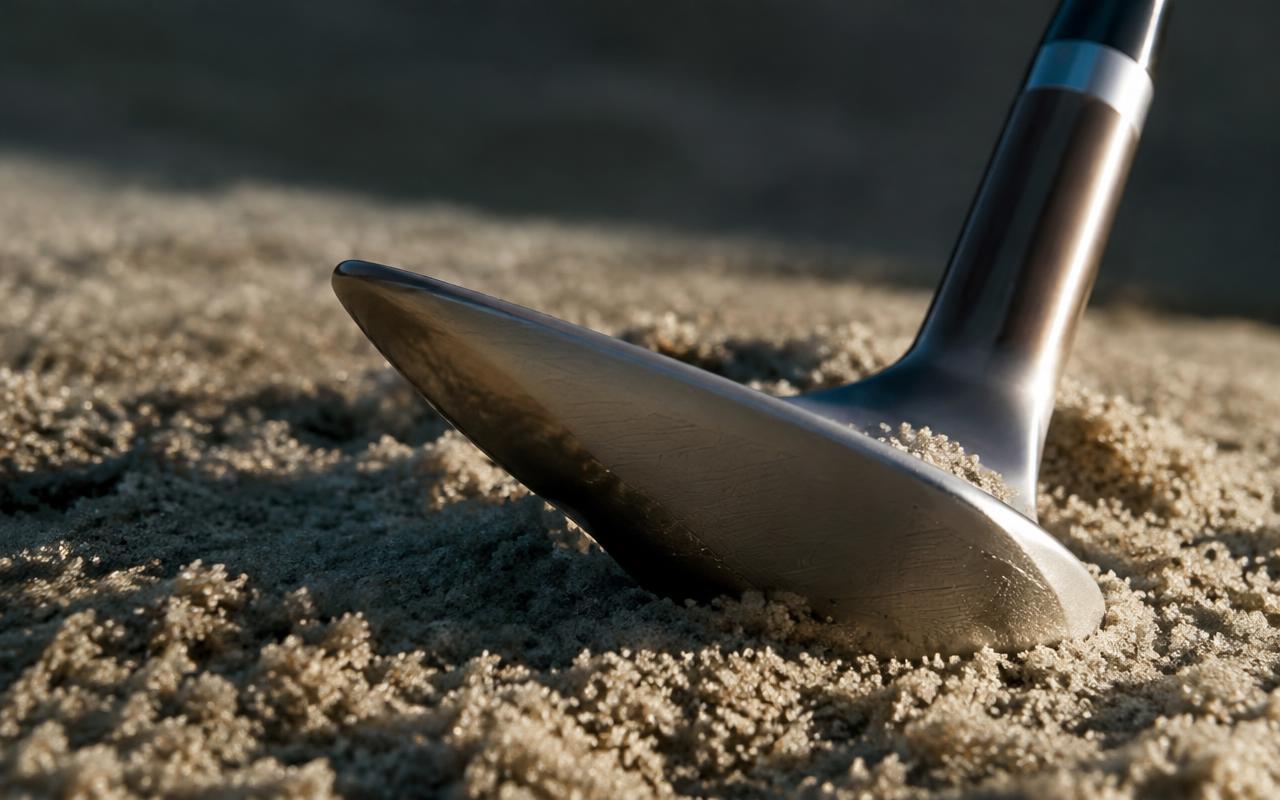
The bounce angle is the measurement, in degrees, from the leading edge of the clubface to the lowest point of the sole (the trailing edge). If you were to hold a wedge perfectly vertical, you would notice that the leading edge sits slightly off the ground while the sole makes contact. That gap represents the bounce. A higher angle means the leading edge is further off the ground, whereas a lower angle keeps the leading edge closer to the turf.
The Relationship Between the Leading Edge and the Sole
The leading edge and the sole work in tandem to manage how the club enters and exits the turf. The leading edge acts as the entry point, while the sole serves as a rudder. Without bounce, the sharp leading edge would act like a shovel, burying itself in the ground at impact. By adding bounce, manufacturers create a wedge that can glide through the surface, preserving momentum and helping the face maintain its intended loft through the strike.
Visualizing Bounce in the Address Position
When you set a high-bounce wedge down on a flat surface, the club will naturally tilt back, raising the leading edge significantly. In contrast, a low-bounce wedge will sit relatively flush with the ground. Visualizing this at address helps a golfer understand how much 'safety' they have against a fat shot; more bounce provides a wider margin for error, while less bounce requires more precise contact to avoid thin or bladed shots.
The Mechanics of Turf Interaction
The physics of the short game rely heavily on friction and resistance. When a wedge strikes the ground, the soil and grass provide resistance against the clubhead. Bounce is the design feature that manages this resistance.
How Bounce Prevents Digging
When the sole of the wedge features a significant bounce angle, it encounters the resistance of the ground before the leading edge can bury itself. This creates an upward force that keeps the club moving forward. For golfers who tend to hit behind the ball, bounce can be a lifesaver, as it allows the club to skid into the back of the ball rather than getting stuck in the mud.
The Role of the Trailing Edge
While the leading edge gets much of the attention, the trailing edge—the back part of the sole—is equally important. The width and shape of the sole, often referred to as the 'grind,' dictate how the bounce behaves. A wide sole adds effective bounce, making it harder for the club to dig, while a narrow sole reduces that resistance, allowing for more versatility but requiring higher skill levels to master.
Friction and Resistance Through Impact
Different turf types offer varying levels of friction. On lush, thick grass, the bounce helps the club stay above the root system. On firm, baked-out fairways, too much bounce can cause the club to hit the ground and skip upward too quickly, often leading to 'bladed' shots where the leading edge strikes the middle of the ball. Balancing this resistance is the key to a consistent short game.
Low Bounce Wedges: Precision for Firm Conditions
Low bounce wedges typically feature a bounce angle between 4 and 6 degrees. These are precision tools designed for specific conditions and specific players.
Characteristics of Low Bounce (4 to 6 Degrees)
A low bounce wedge allows the leading edge to sit very tight to the ground. This is aesthetically pleasing to many better players who want to feel as though they can slide the club under the ball with ease. However, this design provides very little protection against digging.
Ideal Swing Types for Low Bounce
Golfers who have a shallow attack angle—often called 'sweepers'—benefit most from low bounce. Because these players do not take deep divots, they don't need the club to 'push' back against the ground. Low bounce is also ideal for golfers who like to open the clubface for flop shots, as it keeps the leading edge low even when the face is aimed toward the sky.
Managing Tight Lies and Hardpan
If you play on courses with very firm fairways, little grass, or 'hardpan' dirt, low bounce is almost a necessity. In these conditions, the ground does not give way. A high bounce wedge would hit the hard surface and rebound into the ball. A low bounce wedge allows you to pick the ball cleanly off the surface.
Mid Bounce Wedges: The Versatile All-Rounder
Mid bounce wedges, ranging from 7 to 10 degrees, are the most common configuration found in retail stores and for good reason.
Characteristics of Mid Bounce (7 to 10 Degrees)
These wedges offer a balanced approach. They provide enough bounce to help with slight mishits but not so much that the club becomes difficult to use on firmer lies. They are the 'Goldilocks' of wedge design.
Why Mid Bounce Suits Most Amateur Golfers
The average amateur golfer does not have a perfectly consistent attack angle. Some days they might be steep; other days they might sweep. Mid bounce provides a safety net for both scenarios. It is versatile enough to be used from the fairway, the rough, and most bunkers.
Adaptability Across Different Turf Types
If you travel to different courses or play throughout the seasons, mid bounce is the safest bet. It performs admirably in both soft spring conditions and firmer summer conditions, making it the most cost-effective choice for a golfer who only carries one or two wedges.
High Bounce Wedges: Forgiveness in Soft Conditions
High bounce wedges feature angles of more than 10 degrees, sometimes reaching as high as 14 or 16 degrees in specific sand wedge designs.
Characteristics of High Bounce (More Than 10 Degrees)
These wedges are designed to displace a significant amount of material—whether that be sand or soft turf. The high angle makes it virtually impossible for the leading edge to dig, provided the golfer maintains their speed through the shot.
The Benefits for Steep Attack Angles
Golfers who 'dig' and take large, deep divots often struggle with wedges that have too little bounce. For these players, high bounce acts as a stabilizer, preventing the club from slowing down too much upon impact with the ground. It encourages a more aggressive strike without the fear of hitting the shot 'fat.'
Mastering Soft Sand and Lush Fairways
In soft, fluffy sand, a high bounce wedge is a golfer's best friend. It allows the club to enter the sand behind the ball and 'splash' it out without the club getting buried. Similarly, on lush, over-seeded fairways, high bounce prevents the club from snagging on the long blades of grass.
Determining Your Swing Type
To choose the right bounce, you must first understand your own swing. The easiest way to do this is to look at your divots.
The 'Sweeper' or 'Picker' Profile
If you rarely take a divot, or if your divots are very thin and shallow, you are a sweeper. You likely prefer to see the club sit close to the turf. Low to mid bounce is generally best for your game.
The 'Neutral' Striker
A neutral striker takes a moderate divot that starts just after the ball. This golfer can play almost any bounce but will find the most consistency with mid-bounce options that allow for versatility in shot-making.
The 'Digger' and Deep Divot Makers
If your divots look like a brick and you frequently struggle with shots that come up short because the club got stuck in the ground, you are a digger. High bounce will revolutionize your short game by providing the necessary resistance to keep the club moving.
Assessing Your Local Course Conditions
Your swing is only half the equation; the environment where you play most of your golf dictates the other half.
Impact of Grass Species on Bounce Performance
Bentgrass and Ryegrass tend to be softer and more lush, favoring mid to high bounce. Bermudagrass, especially when dormant or cut tight, can be 'grainy' and firm, often requiring more precise bounce selection. If the grass is 'sticky,' more bounce helps the club glide through.
Dealing with Wet vs. Dry Environments
Wet turf is soft turf. If you play in a region with high rainfall, your wedges will naturally want to dig more. Increasing your bounce can compensate for the lack of ground stability. Conversely, in desert or links-style golf where the ground is baked hard, low bounce is required to get under the ball.
Bunker Sand Consistency and Wedge Selection
Not all sand is created equal. Fine, powdery sand requires high bounce to prevent the club from sinking. Coarse, heavy, or wet sand is firmer, meaning a mid-bounce wedge often performs better to prevent the club from bouncing off the top of the sand and into the ball.
The Synergy Between Loft and Bounce
It is a mistake to view bounce in isolation. It must be balanced across your entire wedge set.
Gap Wedge vs. Lob Wedge Configurations
A gap wedge (typically 50-52 degrees) is often used for full shots. As such, mid-bounce is usually preferred to ensure consistent turf interaction on full swings. A lob wedge (60 degrees) is used for variety, and players often choose the bounce based on their most common 'specialty' shot.
Why Your Sand Wedge Usually Needs More Bounce
The sand wedge (54-56 degrees) is the workhorse of the bag. Because it is used most frequently in bunkers and thick rough, it traditionally carries the highest bounce in the set to provide maximum forgiveness.
Strategic Gapping for a Complete Short Game
A wise strategy is to carry wedges with different bounce profiles. For example, having a high-bounce sand wedge for soft conditions and a low-bounce lob wedge for firm lies allows you to handle any situation the course throws at you.
Common Mistakes When Selecting Wedge Bounce
Even experienced golfers can fall into traps when selecting their equipment.
Overestimating Skill Level vs. Forgiveness
Many amateurs see professional golfers using low-bounce wedges and assume they should do the same. In reality, pros have the hand-eye coordination to strike the ball perfectly every time. For the average player, more bounce is almost always better.
Ignoring the Impact of Bounce on Full Shots
While we focus on chips and pitches, bounce affects full swings too. Too much bounce on a full swing from a tight fairway can result in thin shots that fly over the green. Always test your wedges with full swings to ensure the bounce matches your delivery.
Failing to Adjust for Seasonal Turf Changes
The wedge that works in the soft, wet spring might be a liability in the rock-hard summer. Consider having a 'backup' wedge with a different bounce to swap in when the seasons change, ensuring your equipment always matches the environment.
Selection Criteria for Wedge Bounce
When selecting your next wedge, consider these three pillars:
- Attack Angle: Do you dig deep divots (High Bounce) or sweep the ball (Low Bounce)?
- Turf Conditions: Is your home course soft and lush (High Bounce) or firm and fast (Low Bounce)?
- Versatility Needs: Do you need one club for everything (Mid Bounce) or specialized tools for different shots?
Frequently Asked Questions
Can I change the bounce on my current wedges?
Yes, to an extent. A skilled club builder or master grinder can remove material from the sole to reduce bounce or change the grind. However, adding bounce is much more difficult and usually involves adding lead tape or welding, which is not practical for most. It is generally better to purchase a wedge with the desired bounce from the start.
Does bounce matter for full shots or just chips?
Bounce matters for every shot where the club touches the ground. On full shots, the bounce helps regulate the depth of the divot and ensures the clubface remains stable through impact. If you have too much bounce for your swing on a full shot, you risk the club 'skipping' into the ball.
Why do professional golfers often use low bounce lob wedges?
Professionals often play on extremely fast, firm greens and need to be able to open the face of their lob wedge to hit high, soft-landing shots. A low-bounce lob wedge allows the leading edge to stay under the ball even when the face is laid flat. They have the skill to avoid digging despite the low bounce.
How does bounce affect the ball's spin rate?
Bounce indirectly affects spin by ensuring clean contact. If a wedge digs and grass gets between the face and the ball, spin will drop significantly. By helping the club glide and maintain clean contact with the grooves, the correct bounce allows for maximum spin potential.
What happens if I use high bounce on a hard surface?
On a hard surface, the sole of a high-bounce wedge will hit the ground and have nowhere to go. This causes the club to bounce upward abruptly. Usually, this results in the leading edge striking the middle of the ball, sending it screaming across the green in a 'thin' or 'bladed' shot.
Conclusion
Understanding wedge bounce is one of the most effective ways to lower your scores without changing your swing. By matching the bounce of your clubs to your natural attack angle and the conditions of the courses you play, you can eliminate the 'chunked' and 'bladed' shots that plague the short game. Whether you are a digger needing the forgiveness of high bounce or a sweeper seeking the precision of low bounce, choosing the right tool for the job is the first step toward masterly wedge play.
What we like
- Clear spec differences that affect ball flight
- Options across a wide price range
- Widely available in US retail
Things to consider
- Fitting matters more than model names
- Premium tiers add cost for small gains
- Stock and pricing vary by season
Frequently asked questions
Parspun Editorial Team
The Parspun editorial team writes plain-English gear guidance for everyday golfers, focused on specs, fit and value rather than hype.
Get the next guide first
Occasional emails with new gear guides. Double opt-in, unsubscribe anytime.


