Golf Umbrella and Rain Gear Guide: Play in Wet Weather
Playing through a downpour requires more than just a positive attitude; it demands a strategic approach to equipment. This guide explores the essential components of a wet-weather golf setup.
Parspun is reader-supported. When you buy through links on our site, we may earn an affiliate commission at no extra cost to you.
Golf Equipment Guide is supported by its readers. We may earn an affiliate commission when you purchase through links on our site.
Understanding the Role of a Specialized Golf Umbrella
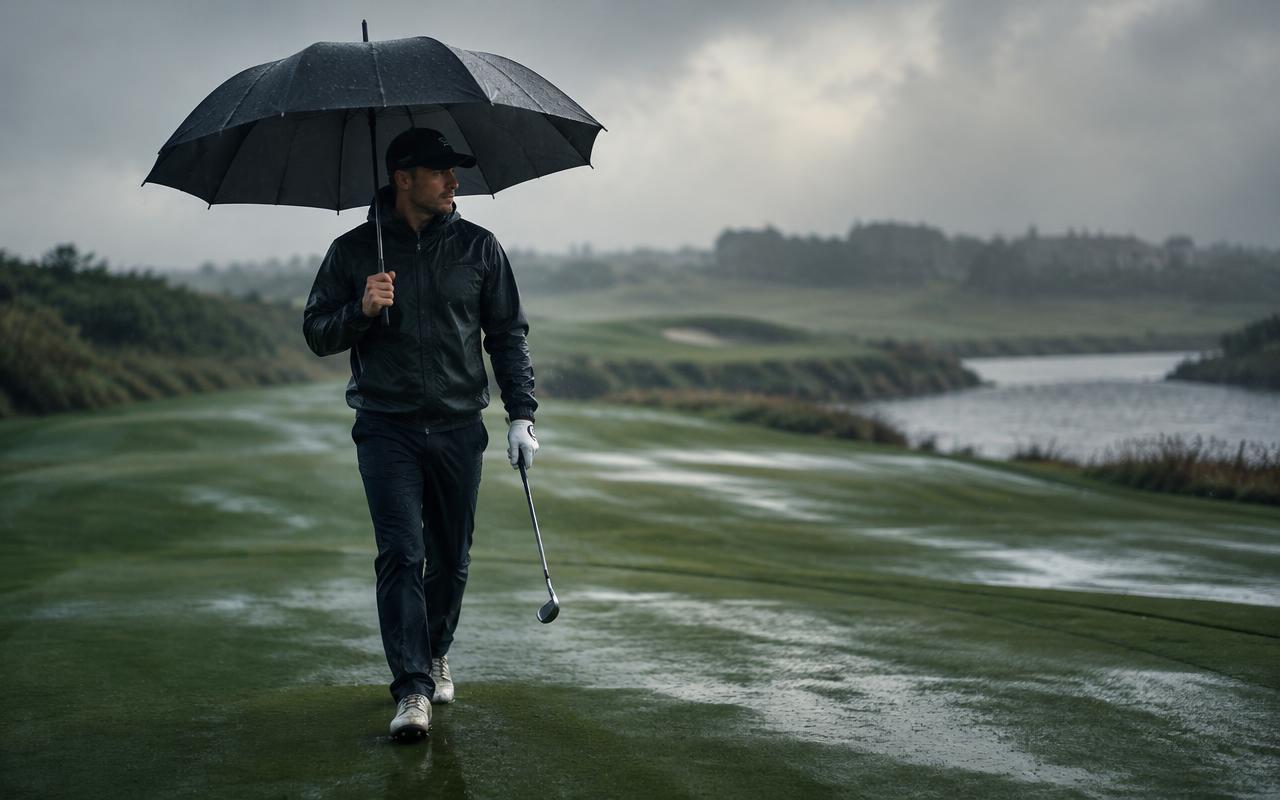
When the clouds open up mid-round, a standard handheld umbrella rarely suffices. The golf umbrella and rain gear guide begins with the primary shield: the umbrella. Unlike everyday versions, these are engineered for the open, wind-swept environment of a golf course, where a flimsy frame will fail at the first gust of wind.
Diameter and Coverage Area
Coverage is the most obvious differentiator. A standard umbrella typically measures between 35 and 45 inches across. In contrast, a golf-specific model usually spans between 60 and 68 inches, with some oversized versions reaching even further. This extra surface area is not just for the golfer; it is designed to protect the golf bag, the clubs, and potentially a caddy or a push cart. The goal is to create a dry microclimate that allows you to transition from the walking path to your shot without the club grips getting slick.
Wind Resistance and Double-Canopy Designs
The greatest enemy of an umbrella on the golf course is not the rain, but the wind. Because golf courses are often open landscapes, wind speeds can easily catch the underside of a canopy. A double-canopy design is the industry standard for performance. This construction features a gap between an upper and lower layer of fabric, covered by an overlapping flap. This allows high-pressure wind to pass through the umbrella without creating the lift that causes the frame to invert or "umbrella" inside out. Tensioning systems and fiberglass ribs further enhance this stability, providing enough flex to absorb gusts without snapping.
Shaft Materials and Lightning Safety
While no umbrella provides absolute safety during a lightning storm—and golfers should always seek proper shelter immediately when lightning is detected—material choice matters. Most modern performance umbrellas utilize fiberglass or reinforced composite shafts. Unlike traditional metal or steel shafts, fiberglass is non-conductive, offering a marginally safer profile in electrical weather while also being significantly lighter to carry for 18 holes. Furthermore, these materials are highly resistant to corrosion, ensuring the umbrella continues to open smoothly even after repeated exposure to moisture.
Technical Fabrics in Golf Rain Apparel
Staying dry is a two-part challenge: you must prevent rain from entering while allowing perspiration to escape. This is where technical fabrics come into play, moving beyond simple plastic ponchos into the realm of high-performance membranes.
Waterproof vs. Water-Resistant Ratings
Understanding the terminology is vital for any golf umbrella and rain gear guide. "Water-resistant" gear is typically treated with a Durable Water Repellent (DWR) coating that causes water to bead off the surface. It is excellent for light mist but will eventually saturate in a steady rain. "Waterproof" gear, however, utilizes a laminate membrane with microscopic pores. These pores are small enough to block liquid water droplets but large enough to allow water vapor (sweat) to pass through. Look for ratings expressed in millimeters; a rating of 10,000mm to 20,000mm is generally considered the standard for full-day protection in heavy rain.
The Importance of Breathability
If a rain jacket is waterproof but not breathable, the golfer will end up just as wet from sweat as they would have been from the rain. Breathability is measured in grams (g/m²/24h). High-end golf rain gear aims for high breathability to ensure that during the physical exertion of walking or swinging, the internal temperature remains regulated. Without this feature, the "sauna effect" takes hold, leading to discomfort and fatigue.
Sealed Seams and Zippers
A fabric can be perfectly waterproof, but if the seams are stitched normally, water will eventually seep through the needle holes. Quality rain gear features "fully taped" or "sealed" seams, where a waterproof tape is heat-bonded over every internal stitch line. Similarly, zippers should be of the water-resistant variety, often featuring a polyurethane coating or a storm flap that covers the teeth of the zipper to prevent moisture ingress near the chest and pockets.
Rain Jackets: Mobility and Fit Factors
A golf swing is a complex, high-velocity movement. A rain jacket that restricts this movement is a liability to your score. The best rain gear is designed specifically for the mechanics of the sport.
Articulation in the Shoulders and Sleeves
Generic rain jackets are often cut for hiking or casual wear, which can feel tight across the back during the transition at the top of the swing. Golf-specific jackets feature articulated shoulders and sleeves. This means the fabric is cut and sewn to follow the natural arc of the arms. Many designs incorporate stretch panels in high-motion areas, such as the upper back and underarms, to ensure there is zero resistance as the golfer rotates.
Adjustable Cuffs and Waistbands
Excess fabric is the enemy of a good golf swing. If a sleeve is too long or a cuff is too loose, it can interfere with your grip or get caught in the wind. Look for jackets with adjustable Velcro cuffs that allow you to cinch the sleeve at the wrist, keeping the fabric away from your hands. Similarly, drawstrings at the waist allow you to prune the silhouette of the jacket, preventing it from bunching up when you lean over to putt.
Quiet Fabrics and Minimal Distraction
One often overlooked aspect of rain gear is the sound. Older waterproof materials were notorious for a loud "swishing" sound during the swing. Modern technical fabrics are engineered to be "quiet," using soft-touch finishes that minimize friction noise. This psychological benefit helps the golfer maintain focus and rhythm even when the weather is chaotic.
Lower Body Protection: Golf Rain Pants
While many golfers prioritize the jacket, rain pants are arguably more important for long-term comfort, as they protect the large muscle groups in the legs from becoming cold and stiff.
Pass-Through Pockets for Accessibility
Rain pants are almost always worn as an over-shell. This can make accessing your actual trouser pockets—where you keep tees, ball markers, and scorecards—difficult. High-quality rain pants feature "pass-through" pockets, which are essentially zippered slits that allow you to reach through the rain pant into your primary pockets without removing the outer layer.
Leg Openings and Integration with Footwear
Getting in and out of rain pants in the middle of a fairway should be a quick process. Look for pants with extra-long ankle zippers. These allow you to pull the pants on over your golf shoes without having to take them off. Furthermore, many designs include a popper or cinch system at the bottom to ensure the pant leg covers the top of the shoe properly, preventing water from running down your leg and into your socks.
Elasticity for Optimal Swing Range
Lower body stability is the foundation of the golf swing. Rain pants must offer enough room in the seat and thighs to allow for a full crouch when reading greens, without being so baggy that they catch the wind. A mix of elastic waistbands and belt loops provides the best of both worlds: comfort and a secure fit.
Maintaining Grip and Traction in the Rain
The point of contact between the golfer and the club is the most vulnerable area in wet conditions. If the grip slips, the shot is lost.
Specialized Rain Gloves vs. Standard Leather
Standard cabretta leather gloves are excellent in dry heat, but they become slippery and prone to stretching when wet. Rain-specific gloves are typically made from a synthetic suede or microfiber material. The unique property of these gloves is that they actually become tackier as they get wetter. The fibers act like tiny "squeegees" against the rubber of the grip. In heavy rain, it is often best to wear a pair of these gloves on both hands.
Footwear Traction and Moisture Barriers
Wet grass is incredibly slippery. While many modern golfers prefer spikeless shoes, a dedicated spiked shoe often provides superior lateral stability on wet, sloped lies. Regardless of the tread, ensure the shoe features a waterproof membrane (like Gore-Tex). Wet feet lead to blisters and rapid body heat loss, which can end a round prematurely.
Grip Maintenance and Towel Management
The secret to playing in the rain is keeping the grips dry. This requires a two-towel system. Keep one large towel hanging from the umbrella ribs (the driest spot on the course) to dry your hands and grips before every shot. Keep a second towel for cleaning mud off the ball and clubface. Never let your grips touch the wet grass; always lean them against a bag or an umbrella stand.
Golf Bag Protection and Cart Accessories
Your clubs are a significant investment, and keeping the bag dry is essential for maintaining the integrity of the grips and the contents of the pockets.
Rain Hoods and Integrated Bag Covers
Most golf bags come with a matching rain hood. However, many of these are difficult to snap on quickly. Consider an aftermarket rain cover that uses a simple elastic or Velcro attachment. Some premium covers feature a retractable top, allowing you to pull a club out and immediately shield the rest of the set without fumbling with zippers.
Keeping Club Grips Dry During the Round
If water runs down the shaft of the club while it is in the bag, the grip will become saturated from the bottom up. A proper rain cover prevents this. Additionally, if you are using a push cart, ensure the bag is angled in a way that the rain hood provides maximum coverage. Carrying a small piece of dry foam or a specialized "club umbrella" that sits inside the bag can also help keep the top of the bag shielded.
Umbrella Holders and Cart Attachments
For those who use push carts or electric trolleys, an umbrella holder is an essential accessory. This allows the umbrella to stay open and stationary, providing a dry "base camp" where you can mark your scorecard, change gloves, or select a club without having to hold the umbrella yourself. Ensure the holder is adjustable to account for the angle of the rain.
Layering Strategies for Cold and Wet Conditions
Rain is often accompanied by a drop in temperature. Proper layering is key to maintaining core warmth without sacrificing the ability to swing.
Moisture-Wicking Base Layers
The layer closest to your skin should be a synthetic or merino wool fabric designed to wick moisture away. Avoid cotton at all costs; cotton absorbs water and stays cold against the skin, which can lead to chills.
Insulating Mid-Layers
A thin fleece or a technical "quarter-zip" provides the necessary insulation. The goal is to trap a thin layer of warm air near the body. This layer should be relatively form-fitting to avoid bulkiness under the rain jacket.
Outer Shell Integration
The rain jacket serves as the final barrier against wind and water. When layering, ensure that the jacket has enough room to accommodate the layers beneath it without feeling tight in the chest. Many golfers prefer a slightly larger shell for this reason, though modern stretch fabrics have made this less of a necessity.
Post-Round Care for Wet Weather Gear
The longevity of your gear depends entirely on how you treat it after the round is over. Moisture is the precursor to mildew and the breakdown of technical coatings.
Proper Drying Techniques for Umbrellas
Never collapse a wet umbrella and leave it in your trunk. This leads to mold growth and can weaken the fabric. Always open the umbrella fully in a garage or mudroom and allow it to air dry completely before storing it. Avoid placing it in direct sunlight for extended periods, as UV rays can degrade the waterproof coating over time.
Cleaning and Re-proofing Technical Fabrics
Mud and salt from perspiration can clog the pores of a waterproof membrane. Follow the manufacturer's instructions for washing, usually involving a gentle cycle with a specialized technical detergent. Avoid fabric softeners, as they destroy the DWR coating. Periodically, you may need to "re-proof" the garment with a spray-on DWR treatment to restore the water-beading properties of the outer fabric.
Storing Gear to Prevent Mildew
Empty your golf bag pockets after a rainy round. Items like gloves, scorecards, and extra towels will hold moisture. Leave the bag pockets open and pull the clubs out slightly to allow airflow into the bottom of the bag. Taking these extra ten minutes after a round will ensure your gear is ready and smelling fresh for your next outing.
Frequently Asked Questions
What is the difference between a standard umbrella and a golf umbrella?
A golf umbrella is significantly larger, usually between 60-68 inches, to protect both the player and their equipment. It also features specialized wind-relief vents and a non-conductive fiberglass shaft for safety and durability in open environments.
How often should I re-apply waterproof treatment to my rain suit?
This depends on how often you play in the rain and how many times you wash the garment. A good rule of thumb is to re-apply a DWR treatment once a season, or whenever you notice that water is soaking into the fabric rather than beading and rolling off.
Do rain gloves work better when they are wet or dry?
Unlike standard gloves, rain gloves are designed to work better when wet. The microfiber materials create more friction and grip as they absorb moisture, making them essential for maintaining control of the club in a downpour.
Should I buy my rain jacket one size larger for layering?
Most modern golf rain jackets are already cut with a "true to size" fit that accounts for layering. However, if you prefer a very loose fit or wear exceptionally thick sweaters, you might consider sizing up. It is best to try the jacket on over a mid-layer to check for shoulder restriction.
What features should I look for to ensure my umbrella won't flip inside out?
Look for a double-canopy construction. This allows wind to pass through the vents in the fabric, equalizing pressure and preventing the umbrella from catching the wind like a sail. A flexible fiberglass rib system also helps the frame bend without breaking.
Conclusion
Mastering the elements is a hallmark of a dedicated golfer. By understanding the technical specifications of a high-quality golf umbrella and the science behind waterproof apparel, you can transform a miserable day into a competitive advantage. The key is to prioritize mobility, breathability, and grip. With the right preparation, the sound of rain becomes just another part of the game’s ambiance rather than a reason to head for the clubhouse. Keep your gear maintained, your grips dry, and your focus on the next shot, regardless of what the forecast says.
What we like
- Clear spec differences that affect ball flight
- Options across a wide price range
- Widely available in US retail
Things to consider
- Fitting matters more than model names
- Premium tiers add cost for small gains
- Stock and pricing vary by season
Frequently asked questions
Parspun Editorial Team
The Parspun editorial team writes plain-English gear guidance for everyday golfers, focused on specs, fit and value rather than hype.
Get the next guide first
Occasional emails with new gear guides. Double opt-in, unsubscribe anytime.


